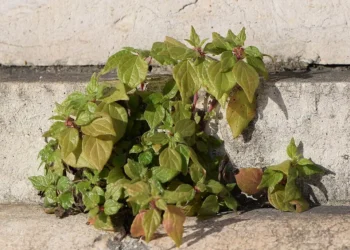
Spreading Pellitory: A Mediterranean Groundcover That’s Made Itself at Home
If you’ve ever noticed a small, unassuming plant creeping along walls, sidewalk cracks, or rocky areas, you might have encountered spreading pellitory (Parietaria judaica). This Mediterranean native has quietly established itself across multiple U.S. states, earning both admirers for its resilience and critics for its persistent spreading habit.
What Is Spreading Pellitory?
Spreading pellitory is a perennial forb – essentially a soft-stemmed herbaceous plant that lacks woody tissue above ground. Also known by its botanical synonym Parietaria diffusa, this low-growing plant belongs to the nettle family, though it lacks the stinging hairs of its more notorious relatives.
The plant features small, heart-shaped to oval leaves and produces tiny, greenish flowers that are easily overlooked. What it lacks in showy blooms, it makes up for in tenacity and ability to thrive where other plants struggle.
Where You’ll Find It Growing
Originally from the Mediterranean region, Europe, and North Africa, spreading pellitory has naturalized across eleven U.S. states: California, Florida, Louisiana, Massachusetts, Michigan, New Jersey, New York, Pennsylvania, Texas, Virginia, and Washington. It reproduces spontaneously without human intervention and has established persistent populations in these areas.
- Species observed
- No observations
Garden Appeal and Landscape Role
Spreading pellitory thrives in USDA hardiness zones 7-11, making it suitable for warmer climates. Its primary appeal lies in its ability to:
- Fill gaps in rock walls and stone structures
- Provide ground cover in challenging locations
- Tolerate poor, disturbed soils where other plants fail
- Survive with minimal water once established
The plant works well in Mediterranean-style gardens, rock gardens, and naturalized areas where its spreading habit can be contained or appreciated.
Growing Conditions and Care
One of spreading pellitory’s strongest attributes is its low-maintenance nature. It adapts to various conditions including:
- Shade to partial sun exposure
- Poor, rocky, or disturbed soils
- Drought conditions once established
- Urban environments with pollution and foot traffic
The plant requires minimal care and can become quite drought tolerant. However, its aggressive spreading habit means it may require management to prevent it from overtaking desired garden areas.
Wildlife and Pollinator Considerations
Spreading pellitory is wind-pollinated, which means it offers minimal benefits to bees, butterflies, and other pollinators that rely on nectar and pollen. While wildlife benefits are not well-documented, the plant’s dense growth may provide some shelter for small creatures.
Should You Plant Spreading Pellitory?
The decision to include spreading pellitory in your garden depends on your specific needs and gardening philosophy. Consider these factors:
Reasons you might choose it:
- Need extremely low-maintenance ground cover
- Have challenging growing conditions (poor soil, urban environment)
- Want to fill gaps in stone walls or rocky areas
- Prefer Mediterranean or naturalized garden styles
Reasons you might skip it:
- It’s non-native and can spread aggressively
- Offers limited benefits to pollinators and wildlife
- May outcompete desired plants
- Inconspicuous appearance may not meet aesthetic goals
Native Alternatives to Consider
If you’re interested in supporting local ecosystems, consider these native ground covers instead:
- Wild ginger (Asarum canadense) for shaded areas
- Creeping phlox (Phlox subulata) for sunny rock gardens
- Native sedums for drought-tolerant coverage
- Regional native grasses for naturalized areas
The Bottom Line
Spreading pellitory is a testament to plant adaptability – it’s found a niche in American gardens and landscapes through sheer persistence. While it won’t win awards for beauty or ecological impact, it serves a purpose for gardeners needing tough, low-maintenance ground cover in challenging conditions. Just be prepared for its enthusiastic spreading habit and consider whether native alternatives might better serve both your garden and local wildlife.