Spreading Snakeroot: Why This Plant Should Stay Out of Your Garden
If you’ve heard of spreading snakeroot (Ageratina riparia), also known as Hamakua pamakani, it’s probably not for good reasons. This perennial shrub might seem innocent enough with its clusters of small white flowers, but don’t let its delicate appearance fool you – this plant is a garden bully that you definitely don’t want to invite to your landscaping party.
What Exactly Is Spreading Snakeroot?
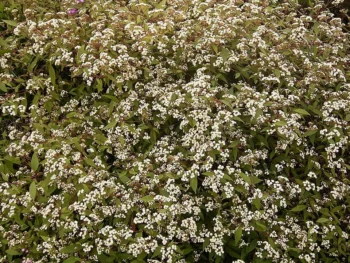
Spreading snakeroot is a multi-stemmed woody perennial that typically grows as a shrub, usually staying under 13-16 feet tall. It produces heart-shaped, serrated leaves and small white fluffy flower clusters that might remind you of tiny pom-poms. While it may look pretty, this plant is actually a non-native species that has established itself in Hawaii, where it reproduces on its own and persists without any human help.
Where You’ll Find This Troublemaker
In the United States, spreading snakeroot is found primarily in Hawaii, where it has become a significant problem. Originally from Central and South America, this plant has proven to be quite the world traveler – and not the kind you want visiting your neighborhood.
- Species observed
- No observations
Why Spreading Snakeroot Is Bad News
Here’s where things get serious: spreading snakeroot is classified as a noxious weed in the United States. This isn’t just a fancy way of saying it’s annoying – noxious weeds are plants that cause serious ecological and economic harm. This particular troublemaker:
- Spreads aggressively and crowds out native Hawaiian plants
- Forms dense patches that can take over entire areas
- Is extremely difficult to control once established
- Disrupts natural ecosystems and native plant communities
Growing Conditions (But Please Don’t!)
Part of what makes spreading snakeroot so problematic is how adaptable it is. It’s classified as Facultative Upland, meaning it usually grows in non-wetland areas but can also tolerate wetland conditions. This flexibility allows it to invade a wide variety of habitats, making it an even more formidable foe for native plants.
Our Strong Recommendation: Don’t Plant It
We cannot stress this enough – do not plant spreading snakeroot in your garden or landscape. Even if you think you can control it, this plant has a way of escaping cultivation and wreaking havoc on local ecosystems. It’s like inviting a party crasher who not only won’t leave but also scares away all your other guests.
Better Alternatives for Your Garden
Instead of risking ecological disaster with spreading snakeroot, consider these native Hawaiian alternatives that will give you beautiful flowers without the environmental guilt:
- Native Hawaiian shrubs with similar white flower clusters
- Indigenous plants that actually support local wildlife and pollinators
- Native species that won’t stage a hostile takeover of your garden
If You Spot Spreading Snakeroot
If you encounter this plant in the wild or suspect it’s growing on your property, contact your local agricultural extension office or invasive species management program. Early detection and removal are key to preventing this plant from establishing new populations and causing further ecological damage.
Remember, when it comes to spreading snakeroot, the best growing tip we can give you is simple: don’t grow it at all. Your local ecosystem will thank you, and you’ll sleep better knowing you’re not contributing to the invasion of this botanical bully.