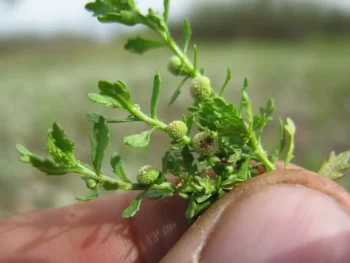
Spreading Sneezeweed: A Small but Persistent Garden Visitor
If you’ve ever noticed tiny, unassuming plants popping up in moist corners of your garden, you might have encountered spreading sneezeweed (Centipeda minima). This diminutive annual herb has a knack for finding its way into gardens across parts of the northeastern United States, though it’s not originally from around these parts.
What Is Spreading Sneezeweed?
Spreading sneezeweed is a small annual forb – essentially a non-woody flowering plant that completes its entire life cycle in one growing season. Despite its common name, it’s quite different from the showy native sneezeweeds (Helenium species) that many gardeners know and love. This little plant is much more modest in its appearance, with tiny flowers and a low-growing habit.
Botanically known as Centipeda minima, this species was once classified under a different name (Artemisia minima), which might cause some confusion in older gardening references.
Where You’ll Find It
Currently, spreading sneezeweed has established populations in Massachusetts and Pennsylvania. As a non-native species that arrived from Australia and Asia, it has managed to naturalize in these areas, reproducing on its own without human assistance.
- Species observed
- No observations
Garden Characteristics and Appeal
Let’s be honest – spreading sneezeweed isn’t going to win any beauty contests. This plant is more about function than form, serving as a low-growing ground cover that fills in gaps and edges. Its flowers are tiny and inconspicuous, typically white or greenish, and its leaves are small and narrow.
The plant’s main appeal lies in its adaptability rather than its aesthetic value. It can handle various growing conditions and doesn’t demand much attention once it’s settled in.
Growing Conditions and Care
One of the interesting things about spreading sneezeweed is its flexibility when it comes to moisture. Depending on where you are, it can behave quite differently:
- In some regions, it’s equally happy in wet or dry conditions
- In mountainous and piedmont areas, it typically prefers drier, upland sites
- In northeastern regions, it almost always sticks to non-wetland areas
This adaptability makes it a low-maintenance option for gardeners who want something that can handle varying moisture levels without much fuss.
Should You Plant It?
Here’s where things get a bit nuanced. While spreading sneezeweed isn’t currently listed as invasive or problematic, it is a non-native species. For gardeners focused on supporting local ecosystems and native wildlife, there are better choices available.
If you’re looking for similar low-growing, adaptable plants that are native to North America, consider these alternatives:
- Native sedges for wet areas
- Wild strawberry (Fragaria virginiana) for ground cover
- Native violets for shaded, moist spots
Wildlife and Pollinator Value
Unfortunately, spreading sneezeweed doesn’t offer much in the way of wildlife benefits. Its tiny flowers provide minimal nectar and pollen resources for pollinators, and it doesn’t serve as a host plant for native butterfly or moth caterpillars. This is another point in favor of choosing native alternatives that can better support local wildlife.
The Bottom Line
Spreading sneezeweed is one of those plants that shows up whether you invite it or not. While it’s not harmful to grow, it’s also not particularly beneficial for native wildlife or especially attractive in the garden. If you find it growing naturally on your property, there’s no urgent need to remove it, but there are certainly more exciting and ecologically valuable plants to choose for intentional plantings.
For gardeners passionate about supporting native ecosystems, investing in native ground covers and low-growing plants will provide much greater benefits for local wildlife while often offering more visual interest as well.