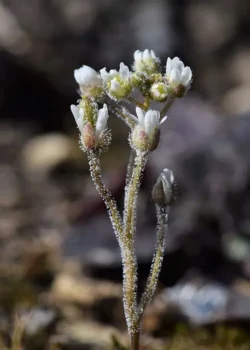
Spring Draba: A Tiny Pioneer That Brings Early Garden Magic
If you’ve ever wondered what those tiny white flowers are that pop up in your garden before most plants have even thought about waking up from winter, you might be looking at spring draba (Draba verna). This diminutive annual is one of nature’s earliest risers, often blooming when there’s still frost on the ground and most gardeners are still dreaming of spring.
What Exactly Is Spring Draba?
Spring draba is a small annual forb – basically a non-woody herbaceous plant that completes its entire life cycle in just one growing season. Don’t let its size fool you though; this little powerhouse packs quite a punch when it comes to early season garden interest. The plant forms tiny rosettes of leaves close to the ground and sends up delicate stems topped with clusters of small, four-petaled white flowers.
The Non-Native Reality Check
Here’s something important to know upfront: spring draba isn’t native to North America. It originally hails from Europe and western Asia but has made itself quite at home across much of the continent. In Canada, it’s considered a waif – meaning it shows up but doesn’t always stick around permanently. In the lower 48 states, it’s become more established and reproduces on its own without human help.
Where You’ll Find Spring Draba
This adaptable little plant has spread far and wide across North America. You can find it growing in states from Alabama to Wyoming, and in Canadian provinces from Alberta to Quebec. It’s particularly common in disturbed areas, roadsides, and gardens where the soil has been worked.
- Species observed
- No observations
Why Gardeners Might (Or Might Not) Want Spring Draba
Let’s be honest about the pros and cons of having spring draba in your garden:
The good news: Spring draba provides incredibly early nectar for small pollinators when little else is blooming. It’s also quite charming in rock gardens or naturalized areas, and it requires absolutely zero maintenance once established. Plus, it completes its lifecycle quickly and doesn’t compete with other plants for long.
The considerations: Since it’s non-native, it’s not supporting native wildlife ecosystems in the same way indigenous plants would. It also self-seeds readily, which some gardeners might find weedy.
Growing Conditions and Care
If you’re thinking about welcoming spring draba into your garden (or if it’s already invited itself), here’s what it likes:
- Sunlight: Full sun to partial shade
- Soil: Well-drained soils; actually prefers poor, sandy, or gravelly conditions
- Water: Minimal watering needed; drought tolerant once established
- Hardiness: Thrives in USDA zones 3-9
Best Garden Spots for Spring Draba
Spring draba shines brightest in:
- Rock gardens and alpine settings
- Naturalized meadow areas
- Between stepping stones or in gravel paths
- Areas where you want early spring interest
Planting and Care Tips
The beauty of spring draba is that it practically grows itself. If you want to establish it, simply scatter seeds in fall or early spring on prepared soil. The plant will handle the rest. Since it’s an annual, it relies on self-seeding to return each year. Most gardeners find that once spring draba appears, it tends to return annually without any intervention.
Care requirements are minimal to nonexistent. In fact, trying to pamper this plant with rich soil and regular watering might actually discourage it, as it’s adapted to tougher conditions.
Native Alternatives to Consider
While spring draba can be a charming addition to the right garden, consider these native alternatives that provide similar early season interest while supporting local ecosystems:
- Spring beauty (Claytonia virginica)
- Bloodroot (Sanguinaria canadensis)
- Wild ginger (Asarum canadense)
- Early saxifrage (Micranthes virginiensis)
The Bottom Line
Spring draba is one of those plants that tends to show up whether you invite it or not. If you appreciate early spring flowers and don’t mind a non-native plant that behaves itself reasonably well, it can add subtle charm to rock gardens and naturalized areas. However, if you’re focused on supporting native plant communities, you might want to encourage native early bloomers instead. Either way, understanding what you’re looking at in your garden makes you a better gardener – and spring draba is definitely worth knowing about.