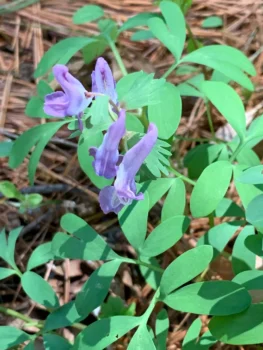
Spring Fumewort: A Charming Early Bloomer for Woodland Gardens
If you’re looking for early spring color in your shade garden, spring fumewort (Corydalis solida) might catch your eye with its delicate, tubular flowers and ferny foliage. This small perennial brings a touch of woodland charm to gardens across the northeastern United States and parts of Canada, though it comes with some considerations worth knowing about.
What is Spring Fumewort?
Spring fumewort is a small herbaceous perennial that belongs to the fumitory family. Also known by its botanical name Corydalis solida, this plant is what botanists call a forb – essentially a non-woody plant that dies back to the ground each year but returns from underground structures.
This charming little plant is actually native to Europe, not North America. It has established itself as a non-native species that reproduces on its own in parts of Canada and the United States, particularly in Ontario, Connecticut, Massachusetts, and Vermont.
- Species observed
- No observations
Why Gardeners Love (and Sometimes Question) Spring Fumewort
Spring fumewort has some appealing qualities that draw gardeners to it:
- Early spring blooms provide nectar when few other flowers are available
- Delicate pink, purple, or white tubular flowers are quite pretty
- Low-growing habit makes it suitable for woodland ground cover
- Attractive, fern-like foliage adds texture to shade gardens
- Naturalizes well in woodland settings
However, since it’s not native to North America, some gardeners prefer to stick with indigenous alternatives that better support local ecosystems.
Growing Spring Fumewort Successfully
If you decide to grow spring fumewort, here’s what it needs to thrive:
Growing Conditions
- Partial to full shade (mimicking its natural woodland habitat)
- Moist, well-draining soil rich in organic matter
- Cool conditions – it prefers areas that don’t get too hot in summer
- USDA hardiness zones 4-8
Planting and Care Tips
- Plant tubers or bulbs in fall, about 2-3 inches deep
- Space plants 4-6 inches apart
- Add compost or leaf mold to improve soil
- Water regularly during the growing season, but allow soil to dry somewhat in summer
- Don’t be alarmed when the plant goes dormant and disappears in summer – this is normal!
- Allow it to self-seed if you want it to naturalize
What to Expect
Spring fumewort is what gardeners call a spring ephemeral. It emerges early in spring, blooms for several weeks, then gradually dies back as temperatures warm and tree canopies fill in. By mid-summer, it will have completely disappeared until next spring – this is perfectly normal behavior.
The plant typically grows 6-8 inches tall and spreads slowly through underground tubers and self-seeding. Its flowers appear in small clusters and are quite attractive to early pollinators looking for nectar sources.
Native Alternatives to Consider
While spring fumewort isn’t invasive, many gardeners prefer supporting native ecosystems with indigenous plants. Here are some lovely native alternatives that provide similar early spring interest:
- Wild ginger (Asarum canadense) – low-growing native ground cover
- Bloodroot (Sanguinaria canadensis) – beautiful white spring flowers
- Spring beauty (Claytonia virginica) – delicate pink and white blooms
- Wild columbine (Aquilegia canadensis) – distinctive red and yellow flowers
The Bottom Line
Spring fumewort can be a lovely addition to woodland gardens, offering early color and pollinator support when little else is blooming. While it’s not native to North America, it doesn’t appear to be aggressively invasive either. The choice ultimately comes down to your gardening philosophy and whether you prefer supporting native ecosystems or don’t mind incorporating well-behaved non-native plants.
If you do choose to grow it, you’ll be rewarded with charming spring blooms and the satisfaction of providing early-season nectar for hungry pollinators. Just remember that this little plant likes to take a summer vacation – so don’t panic when it disappears!