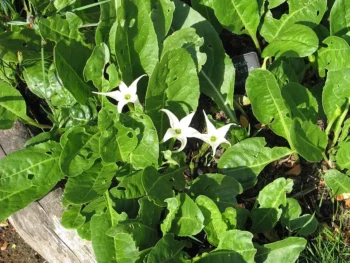
Springblossom (Jaborosa integrifolia): A Lesser-Known Non-Native Perennial
Meet springblossom, a somewhat mysterious perennial that goes by the botanical name Jaborosa integrifolia. While not as well-known as many garden favorites, this non-native plant has quietly established itself in parts of the southeastern United States, sparking curiosity among plant enthusiasts who encounter it.
What Exactly Is Springblossom?
Springblossom is classified as a forb – essentially a non-woody perennial plant that lacks significant woody tissue above ground. Think of it as an herbaceous perennial that dies back to ground level each year, with its perennating buds safely tucked at or below the soil surface, ready to emerge when conditions are right.
This plant belongs to a group that includes many familiar garden plants, but springblossom itself remains somewhat of an enigma in horticultural circles, with limited information available about its specific growing requirements and garden performance.
Where You’ll Find Springblossom
Currently, springblossom has been documented growing wild in Alabama and Louisiana. As a non-native species, it reproduces spontaneously without human intervention and has shown the ability to persist in these southeastern states.
- Species observed
- No observations
Garden Considerations
Here’s where things get interesting – and a bit challenging. While springblossom exists in the wild and appears to be establishing itself naturally, there’s remarkably little information available about its specific garden requirements, growth habits, or ornamental value. This makes it difficult to provide concrete growing advice.
What we do know is that springblossom has a facultative wetland status in the Atlantic and Gulf Coastal Plain region. This means it’s adaptable, capable of growing in both wetland and non-wetland conditions – a trait that suggests it might be fairly tolerant of varying moisture levels.
The Mystery Factor
One of the most intriguing aspects of springblossom is how little we know about it from a gardening perspective. Details about its:
- Mature size and growth rate
- Flower characteristics and timing
- Preferred soil conditions
- Hardiness zones
- Wildlife and pollinator benefits
- Propagation methods
…remain largely unknown or undocumented in readily available horticultural sources.
Should You Grow Springblossom?
This is where the plot thickens. Without clear information about springblossom’s invasive potential or specific growing requirements, it’s difficult to make a strong recommendation either way. While it hasn’t been flagged as invasive or noxious, the lack of comprehensive information makes it challenging to predict how it might behave in various garden settings.
If you’re curious about this plant and happen to encounter it, observation might be your best bet. However, for most gardeners, especially those interested in supporting local ecosystems, focusing on well-documented native alternatives would be a more reliable choice.
Native Alternatives to Consider
Since springblossom’s garden value remains uncertain, consider these native southeastern perennials that offer known benefits:
- Wild bergamot (Monarda fistulosa) – excellent for pollinators
- Purple coneflower (Echinacea purpurea) – beautiful and supports wildlife
- Wild ginger (Asarum canadense) – great for shady spots
- Cardinal flower (Lobelia cardinalis) – stunning red blooms, loves moisture
The Bottom Line
Springblossom represents one of those fascinating plant mysteries that occasionally pop up in the gardening world. While it’s establishing itself in parts of the Southeast, the lack of detailed horticultural information makes it more of a botanical curiosity than a reliable garden choice at this point.
If you’re interested in exploring lesser-known plants, springblossom might intrigue you, but proceed with the understanding that you’d be venturing into largely uncharted horticultural territory. For most gardeners, well-researched native alternatives will provide more predictable and beneficial results for both your garden and local wildlife.