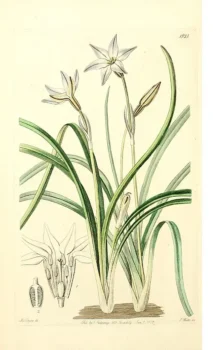
Springstar: A Delicate Bulb with Star-Shaped Blooms
If you’ve ever stumbled across tiny white star-shaped flowers popping up in early spring and wondered what they were, you might have encountered springstar (Tristagma uniflorum). This small bulbous perennial has quietly made itself at home across many parts of the United States, bringing delicate beauty to gardens and naturalized areas alike.
What Exactly Is Springstar?
Springstar is a perennial forb – essentially a non-woody plant that comes back year after year. Originally hailing from South America, this little charmer has established itself as a naturalized resident across thirteen U.S. states, from the Southeast to the West Coast. You’ll find it growing wild in Alabama, Arkansas, California, Florida, Georgia, Louisiana, Mississippi, North Carolina, Oklahoma, Oregon, South Carolina, Texas, and Virginia.
- Species observed
- No observations
Don’t be surprised if you see this plant listed under other names in older gardening references. Tristagma uniflorum has quite the collection of synonyms, including Brodiaea uniflora, Ipheion uniflorum, Milla uniflora, and Triteleia uniflora. Plant taxonomy can be a bit like a game of musical chairs sometimes!
The Appeal of Springstar
What makes springstar special is its understated elegance. Growing just 4-6 inches tall, this petite plant produces charming star-shaped white flowers adorned with delicate blue-green stripes. The blooms appear in early spring, often when many other plants are still sleeping, making it a welcome sight after a long winter.
The flowers aren’t just pretty to look at – they also provide nectar for small pollinators like bees who are eager for early season food sources. While we don’t have complete information about its broader wildlife benefits, any early-blooming flower is generally appreciated by hungry pollinators.
Where Springstar Thrives
Springstar is remarkably adaptable and can flourish in USDA hardiness zones 6 through 10. It performs best in well-drained soil and can handle both full sun and partial shade conditions. Once established, it’s quite drought tolerant, making it a relatively low-maintenance addition to the garden.
This plant really shines in:
- Rock gardens where its small stature won’t get overwhelmed
- Cottage-style gardens for a touch of old-world charm
- Naturalized areas where it can spread and create drifts
- As ground cover in appropriate settings
Growing and Caring for Springstar
If you decide to grow springstar, plant the bulbs in fall for spring blooms. The key to success is ensuring good drainage – these bulbs don’t appreciate sitting in soggy soil. Once planted, they’re fairly self-sufficient.
Here are some care tips:
- Allow the foliage to die back naturally after flowering to feed the bulb
- Avoid overwatering, especially during dormancy
- The plant can spread by self-seeding, so be prepared for it to naturalize
- Generally pest and disease free
A Word About Native Alternatives
While springstar is a lovely plant that has naturalized successfully in many areas, it’s worth considering native alternatives that provide similar early spring beauty while supporting local ecosystems. Depending on your region, you might explore native bulbs like wild onion species (Allium), native crocuses, or regional spring ephemeral wildflowers.
Native plants have co-evolved with local wildlife and pollinators, often providing more comprehensive ecological benefits than non-native species. Your local native plant society or extension office can help you identify the best native spring bloomers for your specific area.
The Bottom Line
Springstar offers gardeners an easy-care option for early spring color, especially in rock gardens and naturalized settings. While it’s not native to North America, it appears to coexist peacefully with local plant communities in many areas. Whether you choose to grow it or explore native alternatives, the most important thing is creating a garden that brings you joy while being mindful of your local ecosystem.
As with any non-native plant, it’s wise to keep an eye on how vigorously it spreads in your particular garden and climate. What behaves politely in one location might be more ambitious in another!