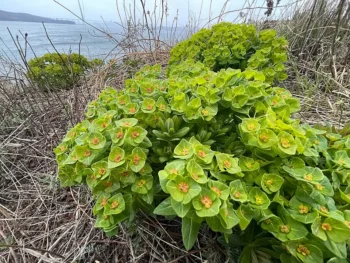
Spurge: A Complex Plant Family Worth Understanding
If you’ve ever wondered about those plants commonly called spurge, you’re looking at members of the Euphorbia genus – one of the most diverse plant families you’ll encounter in gardening. With their unique growth habits and widespread distribution, these plants have found their way into gardens across North America, though their story is more complicated than you might expect.
What Exactly Is Spurge?
Spurge refers to plants in the Euphorbia genus, and they’re quite the shape-shifters of the plant world. These are forb herbs – essentially non-woody plants that can be annual, biennial, or perennial. What makes them interesting is their incredible diversity: some are tiny weeds, others grow into substantial shrubs, but they all share that characteristic of lacking significant woody tissue above ground.
Where You’ll Find Spurge Growing
Spurge has made itself at home across an impressive range of territory. You can find various Euphorbia species growing throughout the United States, from Alabama to Wyoming, and across Canadian provinces from Alberta to Newfoundland. They’ve also established themselves in Alaska, Hawaii, Puerto Rico, and even the U.S. Virgin Islands – talk about adaptable!
- Species observed
- No observations
The Native Status Question
Here’s where things get interesting: most spurge species in North America are actually non-native plants. They’ve been introduced from other parts of the world and have successfully established themselves, reproducing without human help and persisting in the wild. While this widespread establishment shows their adaptability, it’s worth considering native alternatives for your garden.
Should You Grow Spurge in Your Garden?
The answer isn’t straightforward, and here’s why:
Reasons You Might Want Spurge:
- Extremely adaptable and easy to grow
- Drought-tolerant once established
- Can thrive in poor soils
- Some species offer interesting textures and forms
- Low maintenance requirements
Reasons to Think Twice:
- Most species are non-native
- Limited wildlife benefits
- Can be aggressive spreaders
- Toxic sap can irritate skin
- May crowd out native plants
Wildlife and Ecosystem Impact
If you’re hoping to support local wildlife, spurge might not be your best bet. Research shows that these plants provide only 2% to 5% of the diet for large animals, small mammals, and terrestrial birds. They also offer sparse cover for wildlife. This limited ecological value is something to consider when planning a wildlife-friendly garden.
Growing Spurge Successfully
If you decide to grow spurge, here’s what you need to know:
Basic Care Requirements:
- Well-draining soil is essential
- Full sun to partial shade
- Minimal watering once established
- Hardy across a wide range of USDA zones (varies by species)
Important Safety Note:
Always wear gloves when handling spurge plants. They produce a milky sap that can cause skin irritation and is toxic if ingested. Keep this in mind if you have children or pets.
Better Native Alternatives
Since spurge species are generally non-native, consider these native alternatives that offer similar benefits plus better wildlife value:
- Native sedums for drought tolerance
- Wild bergamot for easy care and pollinator appeal
- Native grasses for texture and wildlife habitat
- Regional wildflowers for color and ecological value
The Bottom Line
While spurge plants are undeniably tough and adaptable, their non-native status and limited wildlife benefits make them less than ideal for ecologically-minded gardeners. If you’re already growing spurge and it’s working well in your landscape, you don’t necessarily need to remove it – just be mindful of its spreading potential. However, for new plantings, exploring native alternatives will give you similar benefits while supporting local ecosystems.
Remember, the best garden is one that reflects both your personal style and environmental consciousness. Whatever you choose to grow, understanding your plants’ origins and impacts helps you make informed decisions for your unique space.