Stalked Bur Grass: Should This Weedy Annual Have a Place in Your Garden?
If you’ve ever walked through a sandy lot or disturbed area and found tiny, prickly seed heads clinging to your socks, you may have encountered stalked bur grass (Tragus racemosus). This small annual grass has quietly established itself across several U.S. states, but is it something you’d actually want to grow in your garden? Let’s dive into what makes this unassuming plant tick.
What is Stalked Bur Grass?
Stalked bur grass, scientifically known as Tragus racemosus, is a small annual grass that belongs to the graminoid family. You might also see it listed under its synonyms Cenchrus racemosus or Nazia racemosa in older plant references. As an annual, it completes its entire life cycle in one growing season, sprouting from seed, flowering, setting seed, and dying all within a year.
This grass is what botanists call a graminoid, meaning it’s part of that large family of grass and grass-like plants that includes true grasses, sedges, and rushes. Don’t let the scientific terminology scare you – it’s simply a way of saying it looks and acts like a grass.
Where Does It Grow?
Originally hailing from Africa and Asia, stalked bur grass is a non-native species that has made itself at home in several U.S. states. You can currently find established populations in Arizona, Maine, Maryland, Massachusetts, New Jersey, New York, North Carolina, and Pennsylvania. The plant reproduces spontaneously in the wild without any human help and tends to persist once established.
- Species observed
- No observations
What Does Stalked Bur Grass Look Like?
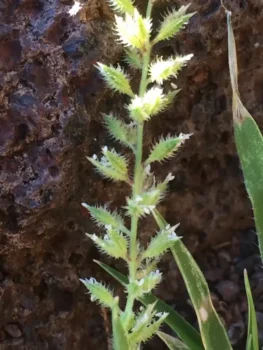
Don’t expect this grass to win any beauty contests. Stalked bur grass is a small, rather inconspicuous plant that most people would overlook – until those prickly seed heads get stuck to their clothes! The plant produces characteristic bur-like seed heads that give it both its common name and its claim to fame (or infamy, depending on your perspective).
Should You Plant Stalked Bur Grass?
Here’s the honest truth: stalked bur grass isn’t typically something gardeners seek out for their landscapes. While it’s not officially listed as invasive or noxious in most areas, it’s generally considered more of a weedy species than an ornamental plant. Here’s why:
- Limited aesthetic appeal compared to native grass alternatives
- Produces annoying bur-like seeds that stick to clothing and pet fur
- No significant wildlife or pollinator benefits
- Tends to appear in disturbed areas rather than well-maintained gardens
Growing Conditions and Care
If stalked bur grass does appear in your garden (and it might, whether you plant it or not), it’s quite adaptable. The plant thrives in sandy, disturbed soils and is notably drought tolerant. It tends to pop up in areas where the soil has been disturbed – think construction sites, vacant lots, or areas where other vegetation has been removed.
As an annual, it doesn’t require any special winter protection, but it will readily self-seed if conditions are right.
Better Native Alternatives
Instead of stalked bur grass, consider these attractive native grass alternatives that offer much more to your garden and local ecosystem:
- Buffalo grass (Bouteloua dactyloides) – A drought-tolerant native perfect for southwestern gardens
- Little bluestem (Schizachyrium scoparium) – Beautiful fall color and excellent wildlife habitat
- Purple top (Tridens flavus) – Native to eastern states with attractive seed heads
- Sideoats grama (Bouteloua curtipendula) – Distinctive seed heads and great drought tolerance
The Bottom Line
While stalked bur grass isn’t necessarily harmful, it’s not particularly helpful either. As a non-native species with limited ornamental value, it’s one of those plants that’s better left to appear naturally in disturbed areas rather than being intentionally cultivated. Your garden – and your socks – will probably be happier with one of the many beautiful native grass alternatives available in your region.
If you’re looking to add grasses to your landscape, focus on native species that will provide habitat for local wildlife, require less water once established, and offer year-round beauty without the sticky seed situation.