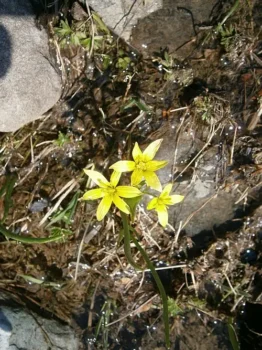
Star of Bethlehem (Gagea fistulosa): A Delicate Early Spring Bloomer
When winter’s grip finally loosens and gardeners are desperately scanning their landscapes for signs of life, the star of Bethlehem emerges as one of nature’s earliest performers. This diminutive bulbous perennial might not win any awards for showiness, but its cheerful yellow blooms bring welcome color to the garden when most plants are still fast asleep.
What Is Star of Bethlehem?
Star of Bethlehem (Gagea fistulosa) is a small perennial forb in the lily family that produces clusters of bright yellow, star-shaped flowers in early spring. This herbaceous plant lacks woody stems and dies back to its underground bulb each winter, returning reliably year after year. The plant is also known by its botanical synonym Ornithogalum fistulosum.
It’s worth noting that this particular star of Bethlehem is a non-native species that was introduced from Europe and western Asia. While it has established itself in the wild and reproduces without human intervention, it’s currently only documented in Vermont within the United States.
- Species observed
- No observations
Why Consider Growing Star of Bethlehem?
Here are the main reasons gardeners might want to include this early bloomer in their landscape:
- Early season color: Blooms appear in late winter to early spring when few other plants are flowering
- Low maintenance: Once established, requires minimal care and naturalizes easily
- Pollinator support: Provides early nectar for small pollinators emerging from winter
- Compact size: Perfect for rock gardens, woodland edges, or naturalizing in small spaces
- Hardy nature: Tolerates cold temperatures and adapts to various growing conditions
Garden Design and Landscape Role
Star of Bethlehem works best in informal, naturalized settings where its modest stature won’t get lost among larger plants. Consider using it in:
- Rock gardens and alpine settings
- Woodland garden edges
- Naturalized areas under deciduous trees
- Spring bulb displays with other early bloomers
The grass-like foliage emerges early and dies back by summer, making it an excellent companion for plants that emerge later in the season.
Growing Conditions and Care
Star of Bethlehem is remarkably adaptable and easy to grow. Here’s what it prefers:
- Light: Partial shade to full sun (morning sun with afternoon shade is ideal)
- Soil: Well-draining soil of average fertility
- Moisture: Moderate moisture during growing season, tolerates dry conditions when dormant
- Hardiness: Suitable for USDA zones 4-8
Planting and Care Tips
Getting star of Bethlehem established in your garden is straightforward:
- Timing: Plant bulbs in fall, 4-6 weeks before hard frost
- Depth: Plant bulbs 2-3 inches deep and 2-3 inches apart
- Maintenance: Allow foliage to die back naturally to feed the bulb
- Fertilizing: Generally unnecessary in average garden soils
- Watering: Water regularly during active growth, reduce after flowering
A Word About Native Alternatives
While star of Bethlehem can be a charming addition to the garden, consider exploring native early spring bloomers that provide similar benefits while supporting local ecosystems. Depending on your region, options might include wild ginger, bloodroot, trout lily, or native alliums. These alternatives often provide better wildlife support and are naturally adapted to local growing conditions.
The Bottom Line
Star of Bethlehem offers gardeners a reliable, low-maintenance source of early spring color. While it’s not native to North America, it’s not considered invasive in its current limited range. If you’re looking for a small-scale spring bloomer that naturalizes well and requires minimal fuss, this little bulb might earn a spot in your garden. Just remember to explore native alternatives that might provide even greater benefits to your local ecosystem.