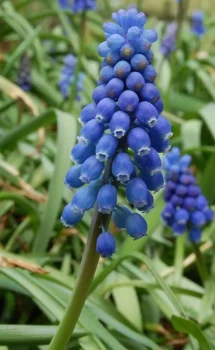
Starch Grape Hyacinth: A Charming Spring Bloomer Worth Considering
If you’re looking for early spring color that practically takes care of itself, the starch grape hyacinth (Muscari neglectum) might just be the low-maintenance charmer your garden needs. This petite bulbous perennial brings clusters of tiny blue-purple flowers to the landscape when most other plants are still waking up from winter’s slumber.
What Is Starch Grape Hyacinth?
Starch grape hyacinth is a small, herbaceous perennial that grows from underground bulbs. Despite its common name, it’s not actually related to true hyacinths – it just happens to produce similar-looking flower clusters. This hardy little plant typically reaches 6-8 inches tall and spreads slowly through bulb offsets to form naturalized colonies over time.
You might also see this plant listed under its botanical synonyms Muscari atlanticum or Muscari racemosum in older gardening references, but Muscari neglectum is the currently accepted scientific name.
Native Status and Distribution
Here’s where things get interesting: starch grape hyacinth isn’t native to North America. Originally from the Mediterranean region of southern Europe and North Africa, this plant has made itself quite at home across much of the United States. It’s now naturalized in 28 states, primarily across the eastern and central regions, from Alabama up to Massachusetts and west to Texas and New Mexico.
- Species observed
- No observations
While it’s considered a non-native species that reproduces on its own in the wild, it’s not currently listed as invasive or problematic. That said, thoughtful gardeners might want to consider native alternatives that provide similar benefits to local ecosystems.
Why Grow Starch Grape Hyacinth?
There are several compelling reasons why this little bulb has won over gardeners across the country:
- Early spring color: Blooms appear in March to April when the garden desperately needs some cheer
- Low maintenance: Once established, it requires virtually no care
- Naturalizing habit: Gradually spreads to create drifts of spring color
- Versatile placement: Works well in rock gardens, under trees, or in informal naturalized areas
- Cold hardy: Thrives in USDA zones 4-8
- Deer resistant: Critters generally leave the bulbs alone
Garden Design and Landscape Use
Starch grape hyacinth shines in cottage gardens and naturalized settings where its informal spreading habit is an asset rather than a concern. It’s particularly lovely when planted under deciduous trees, where it can bloom and complete its growing cycle before the tree canopy fully leafs out.
The plant works beautifully in rock gardens, where its small stature won’t overwhelm other plants, and along pathway edges where its early flowers can be appreciated up close. Many gardeners also use it to create sweeps of spring color in areas where they want a naturalized, meadow-like appearance.
Growing Conditions and Care
One of the best things about starch grape hyacinth is how easy it is to please. Here’s what it prefers:
- Sunlight: Full sun to partial shade (tolerates quite a bit of shade)
- Soil: Well-draining soil of almost any type – even tolerates poor soils
- Water: Moderate moisture during growing season, tolerates dry summers when dormant
- pH: Adaptable to various soil pH levels
Planting and Care Tips
Getting started with starch grape hyacinth is refreshingly simple:
- Plant bulbs in fall, about 3-4 inches deep and 2-3 inches apart
- Choose a location with good drainage – soggy soil can cause bulb rot
- After planting, basically ignore them! These bulbs are remarkably self-sufficient
- Allow foliage to die back naturally in late spring to feed the bulb for next year’s blooms
- Divide overcrowded clumps every 3-4 years if desired, though it’s not necessary
Pollinator and Wildlife Benefits
While starch grape hyacinth does provide some early-season nectar for small pollinators like small bees, its wildlife value is relatively modest compared to native alternatives. The flowers are small and the blooming period is relatively brief, so while they’re not harmful to pollinators, they’re not providing the robust support that native plants offer.
Native Alternatives to Consider
If you’re drawn to the early spring color and naturalizing habit of starch grape hyacinth but prefer to support native ecosystems, consider these North American natives:
- Wild ginger (Asarum canadense): Shade-loving groundcover with interesting flowers
- Bloodroot (Sanguinaria canadensis): Early white flowers and attractive foliage
- Spring beauty (Claytonia virginica): Delicate pink and white flowers
- Wild columbine (Aquilegia canadensis): Lovely red and yellow flowers beloved by hummingbirds
The Bottom Line
Starch grape hyacinth is a charming, low-maintenance addition to gardens where early spring color is desired and a naturalizing habit is welcome. While it’s not native to North America, it’s not considered problematic either. If you choose to grow it, you’ll be rewarded with reliable spring blooms year after year with minimal effort on your part.
That said, if supporting native wildlife is a priority in your garden, consider pairing it with or substituting native spring ephemerals that provide similar aesthetic appeal while offering greater ecological benefits. Either way, your early spring garden will thank you for the splash of color when the rest of the world is still waking up!