Starry Spikemoss: The Tiny Ancient Wonder for Your Tropical Garden
Meet the starry spikemoss (Selaginella stellata), a fascinating little plant that’s not quite a moss, not quite a fern, but something wonderfully unique in between. This diminutive ground-hugger might look delicate, but it’s actually part of an ancient lineage that’s been around since before dinosaurs roamed the Earth!
What Exactly Is Starry Spikemoss?
Despite its common name, starry spikemoss isn’t actually a moss at all. It’s what botanists call a spikemoss or lycopod – a primitive vascular plant that reproduces through spores rather than seeds or flowers. Think of it as evolution’s rough draft for more complex plants, but one that turned out so well it never needed updating.
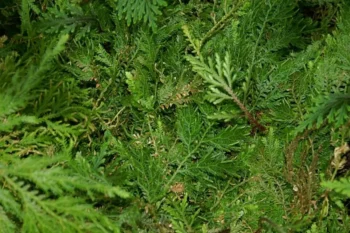
This perennial forb creates delicate, carpet-like mats with intricate branching patterns that truly do resemble tiny stars when viewed up close. The plant lacks any significant woody tissue and stays refreshingly low to the ground, making it perfect for those tricky spots where you need something small but impactful.
Where Does It Come From?
Starry spikemoss is a non-native species that has made itself at home in Hawaii, where it grows and reproduces naturally without human intervention. Originally hailing from tropical regions of Southeast Asia and the Pacific, it has adapted well to Hawaii’s climate and can be found growing in various locations across the islands.
- Species observed
- No observations
Is It Beneficial for Your Garden?
If you’re gardening in tropical or subtropical zones (USDA zones 10-12), starry spikemoss can be a charming addition to your landscape palette. Here’s what it brings to the table:
- Unique texture: Adds an prehistoric, almost alien-like quality to garden designs
- Low maintenance: Once established, requires minimal care
- Versatile placement: Works well in rock gardens, as understory planting, or in terrariums
- Consistent coverage: Forms reliable ground cover in shaded areas
- Conversation starter: Its ancient lineage makes it a fascinating talking point
Growing Conditions and Care
Starry spikemoss prefers the VIP treatment when it comes to moisture and shade. In Hawaii, it typically grows in facultative upland conditions, meaning it usually prefers non-wetland areas but can tolerate some moisture. Here’s what it needs to thrive:
- Light: Partial to full shade (direct sunlight can be harsh on its delicate fronds)
- Soil: Moist, well-draining soil with good organic content
- Humidity: High humidity levels (perfect for tropical climates)
- Temperature: Warm temperatures year-round (zones 10-12 only)
- Watering: Consistent moisture without waterlogging
How to Identify Starry Spikemoss
Recognizing starry spikemoss is all about looking for those distinctive star-like branching patterns. The plant forms low, spreading mats with delicate, scale-like leaves arranged in intricate geometric patterns. Unlike true mosses, spikemosses have actual roots and a vascular system, though you’d need a magnifying glass to appreciate these technical differences.
The starry part of its name becomes apparent when you examine the branching structure closely – each division creates a star-like pattern that’s both mathematical and beautiful.
A Word About Native Alternatives
While starry spikemoss isn’t invasive and can be grown responsibly in appropriate climates, consider exploring native Hawaiian ground covers as well. Native plants provide irreplaceable benefits to local ecosystems and wildlife that introduced species simply cannot match.
Whether you choose to include this ancient little wonder in your garden or admire it from afar, starry spikemoss serves as a living reminder of plant evolution’s incredible journey – and sometimes the best things really do come in small, unassuming packages.