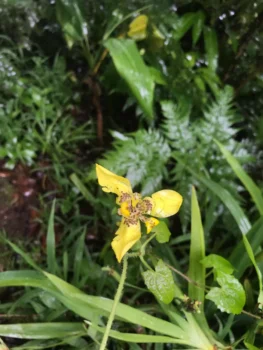
Steyermark’s Trimezia: A Lesser-Known Perennial with an Air of Mystery
Meet Steyermark’s trimezia (Trimezia steyermarkii), a perennial plant that’s something of an enigma in the gardening world. While many gardeners are familiar with popular flowering perennials, this particular species flies under the radar, and honestly, that’s part of what makes it intriguing.
What Exactly Is Steyermark’s Trimezia?
Steyermark’s trimezia is a perennial forb, which is just a fancy way of saying it’s a non-woody plant that comes back year after year. As a forb, it lacks the significant woody tissue that you’d find in shrubs or trees, instead maintaining its perennating buds at or below ground level – nature’s way of ensuring it survives to bloom another season.
This plant belongs to the iris family and has been known by the synonym Trimezia martinicensis in some botanical circles, though that name has been misapplied to this species.
Where Does It Call Home?
Here’s where things get interesting: Steyermark’s trimezia isn’t actually native to Puerto Rico, where it currently grows, but it has established itself there as a naturalized species. It reproduces on its own in the wild and has shown it can persist without human intervention – essentially, it’s made itself at home in Puerto Rican landscapes.
- Species observed
- No observations
Should You Consider Growing It?
This is where we hit a bit of a gardening conundrum. Steyermark’s trimezia falls into that category of plants that are neither vilified as invasive nor celebrated as native treasures. Since its invasive status is unknown and it’s not listed as noxious, there’s no red flag preventing you from growing it – but there’s also limited information about how to do so successfully.
If you’re drawn to unusual plants and don’t mind a bit of gardening detective work, this could be an interesting addition to your collection. However, if you’re looking for reliable, well-documented plants with known care requirements, you might want to consider better-studied alternatives.
The Challenge of Growing Steyermark’s Trimezia
Here’s the honest truth: specific growing information for Steyermark’s trimezia is remarkably scarce. We know it’s a perennial that has managed to establish itself in Puerto Rico’s climate, which suggests it can handle tropical or subtropical conditions, but beyond that, details about its preferences for soil, water, light, and care requirements are limited.
Consider Native Alternatives
Since Steyermark’s trimezia isn’t native to most gardening areas and information about it is limited, you might want to explore native iris family members or similar perennial forbs that are better suited to your local ecosystem. Native plants typically:
- Require less maintenance once established
- Support local wildlife and pollinators
- Are adapted to local climate conditions
- Come with well-documented growing guides
The Bottom Line
Steyermark’s trimezia represents one of those botanical mysteries that might appeal to adventurous gardeners willing to experiment. While it’s not problematic enough to avoid entirely, the lack of available growing information makes it a bit of a gamble for most home gardeners.
If you do decide to try growing it, approach it as you would other members of the iris family and be prepared to learn through trial and observation. And remember – sometimes the most rewarding garden discoveries come from the plants that make us work a little harder to understand them.