Stinknet: A Controversial Ground Cover for Water-Wise Gardens
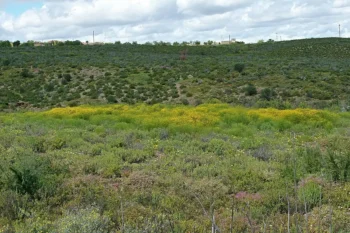
If you’ve ever wandered through the southwestern United States and noticed small, bright yellow ball-shaped flowers carpeting the ground in spring, you’ve likely encountered stinknet (Oncosiphon piluliferum). This South African native has made quite a name for itself in American gardens – though not always for the best reasons.
What is Stinknet?
Stinknet is an annual forb that belongs to the sunflower family. Despite its less-than-flattering common name, this plant produces cheerful clusters of tiny, globe-shaped yellow flowers that can brighten up dry landscapes. The plant gets its distinctive name from the pungent odor it releases when crushed or disturbed – definitely not something you’d want to use in a cutting garden!
You might also see this plant listed under its botanical synonym Matricaria globifera in older gardening references, but Oncosiphon piluliferum is the currently accepted scientific name.
Where Does Stinknet Grow?
Originally from South Africa, stinknet has established itself as a non-native species in the southwestern United States. You’ll find it growing wild in Arizona and California, where it has adapted remarkably well to the arid climate. The plant typically thrives in areas that are usually dry but can occasionally handle some moisture, making it quite versatile in Mediterranean and desert climates.
- Species observed
- No observations
Should You Plant Stinknet in Your Garden?
This is where things get a bit complicated. While stinknet can be an effective ground cover for water-wise gardens, its aggressive self-seeding nature means it can quickly spread beyond where you originally planted it. Here are some considerations:
Potential Benefits:
- Extremely drought tolerant once established
- Provides bright yellow spring color
- Attracts small pollinators and beneficial insects
- Requires minimal care and maintenance
- Works well in USDA hardiness zones 9-11
Potential Drawbacks:
- Can spread aggressively through self-seeding
- Unpleasant odor when disturbed
- May outcompete native plants
- Considered weedy in many areas
Growing Conditions and Care
If you decide to try stinknet in your garden, it’s remarkably easy to grow. This tough little plant prefers full sun and well-draining soil – the more challenging the conditions, the better it seems to perform. It’s perfectly suited for those neglected corners of your yard where other plants struggle.
Stinknet requires very little water once established and actually prefers lean, poor soils over rich, fertile ones. The plant will self-seed readily, so be prepared for it to pop up in unexpected places the following season.
Native Alternatives to Consider
Given stinknet’s aggressive nature, you might want to consider native alternatives that provide similar benefits without the potential for unwanted spread:
- Desert marigold (Baileya multiradiata) for bright yellow flowers
- Brittlebush (Encelia farinosa) for drought tolerance and pollinator appeal
- Desert lupine (Lupinus sparsiflorus) for colorful spring blooms
- Ghost plant (Graptopetalum paraguayense) for low-maintenance ground cover
The Bottom Line
Stinknet can be an effective plant for extremely challenging growing conditions, but its aggressive nature means it’s not the best choice for most home gardens. If you’re dealing with a particularly difficult spot where nothing else will grow, it might be worth considering – just be prepared to manage its spread. For most gardeners, choosing native alternatives will provide similar benefits while supporting local ecosystems and avoiding potential headaches down the road.
Remember, the best gardens work with nature rather than against it, so choosing plants that naturally belong in your area is usually the wisest path forward.