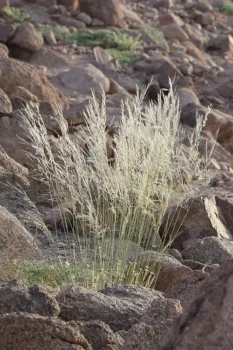
Stipagrostis obtusa: A Desert Grass for Extreme Xeriscaping
If you’re looking for a grass that laughs in the face of drought and thrives where other plants fear to tread, Stipagrostis obtusa might just be your new gardening companion. This hardy desert grass, also known by its scientific synonym Aristida obtusa, brings a touch of wild elegance to the most challenging growing conditions.
What Makes This Grass Special?
Stipagrostis obtusa is a true survivor from the arid regions of North Africa and the Middle East. This fine-textured grass has evolved to thrive in some of the world’s most challenging desert environments, making it an intriguing option for gardeners dealing with extreme heat and minimal rainfall.
The grass produces delicate, narrow leaves and graceful seed heads that add movement and texture to desert landscapes. Its understated beauty lies in its ability to maintain its form even under the harshest conditions.
Where Does It Come From?
This resilient grass calls the deserts of Egypt, Sudan, and the Arabian Peninsula home. It’s perfectly adapted to regions where water is scarce and temperatures soar, thriving in sandy soils and rocky terrain that would challenge most other plants.
Garden Design Potential
While Stipagrostis obtusa isn’t native to North America, it can serve a specific niche in certain garden styles:
- Xeriscape and water-wise gardens
- Desert-themed landscapes
- Rock gardens with extreme drainage
- Mediterranean-style designs
- Areas where irrigation is limited or unavailable
The grass works well as a textural element, providing fine contrast against bold desert plants like agaves or architectural cacti.
Growing Conditions and Care
This grass is all about extremes – it loves what most plants hate:
- Sunlight: Full sun is essential
- Soil: Well-draining, sandy soils; cannot tolerate heavy clay or waterlogged conditions
- Water: Extremely drought tolerant once established; overwatering can be fatal
- Climate: Best suited for USDA zones 9-11; not cold hardy
Planting and Maintenance Tips
Growing Stipagrostis obtusa successfully means mimicking its native desert conditions:
- Plant in spring after the last frost
- Ensure excellent drainage – consider raised beds or sloped areas
- Water sparingly during establishment, then rely on natural rainfall
- Cut back old growth in late winter before new growth emerges
- No fertilization needed – this grass prefers lean conditions
Consider Native Alternatives
While Stipagrostis obtusa can be a useful plant for extreme xeriscaping, consider these native alternatives that provide similar drought tolerance and ornamental value:
- Buffalo grass (Bouteloua dactyloides) for prairie regions
- Blue grama (Bouteloua gracilis) for western landscapes
- Desert willow (Chilopsis linearis) for southwestern gardens
- Various native bunch grasses specific to your region
The Bottom Line
Stipagrostis obtusa fills a very specific niche – it’s perfect for gardeners in hot, arid climates who need a grass that can survive on almost no water. While it may not provide significant wildlife benefits like native grasses do, it can be a practical choice for challenging sites where few other plants will grow.
If you’re dealing with extreme drought conditions and traditional landscaping just isn’t feasible, this desert survivor might be worth considering. Just remember that supporting native plant communities should always be the first choice when suitable native options are available for your specific growing conditions.