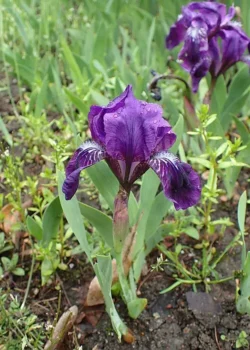
Stool Iris: A European Beauty for American Gardens
Meet the stool iris (Iris aphylla), a charming perennial that’s been quietly making itself at home in American gardens. While this European native might not be as familiar as its more popular iris cousins, it brings its own unique appeal to the landscape with early spring blooms and a compact growing habit that fits beautifully into smaller garden spaces.
What is Stool Iris?
Stool iris is a perennial forb – basically a non-woody plant that comes back year after year. Originally from Central and Eastern Europe, this iris species has found its way into American gardens and even naturalized in some areas, currently documented growing wild in Missouri. Don’t let the somewhat unglamorous common name fool you; this plant has plenty of garden-worthy qualities.
You might occasionally see it listed under the synonym Iris duerinckii, but Iris aphylla is the accepted botanical name for this species.
Geographic Distribution
In the United States, stool iris has been documented growing in Missouri, where it has established itself as a naturalized species. This means it reproduces on its own without human intervention and has become part of the local flora.
- Species observed
- No observations
Garden Appeal and Landscape Role
What makes stool iris special in the garden? Its compact size and early blooming habit make it perfect for rock gardens, perennial borders, and naturalized areas where you want reliable spring color without overwhelming other plants. The classic iris flowers – typically purple-blue with the characteristic bearded petals – appear earlier in the season than many other iris varieties, extending your garden’s bloom time.
The sword-like foliage provides structural interest even when the plant isn’t flowering, making it a solid choice for adding vertical lines to your garden design.
Growing Conditions and Care
Stool iris is refreshingly low-maintenance once established. Here’s what this European transplant prefers:
- Sunlight: Full sun to partial shade
- Soil: Well-drained soil is essential – these plants hate soggy feet
- Water: Drought tolerant once established, minimal watering needed
- Climate: Hardy in USDA zones 3-8
Planting and Care Tips
Plant stool iris rhizomes in fall for best establishment. Like most irises, the rhizomes should be planted shallow – you want the top of the rhizome visible at soil level. Space them about 12-18 inches apart to allow for natural spreading.
Divide clumps every 3-4 years to maintain vigor and prevent overcrowding. The best time for division is late summer, after the foliage has died back but before the ground freezes.
Benefits for Pollinators and Wildlife
Like most iris species, stool iris provides nectar and pollen for bees and other pollinators during its bloom period. The early flowering time can be especially valuable for pollinators emerging in spring when food sources might be limited.
Should You Plant Stool Iris?
Stool iris can be a lovely addition to gardens, especially if you’re looking for early spring color and low-maintenance perennials. However, since it’s not native to North America, you might want to consider native alternatives that provide similar benefits while supporting local ecosystems more directly.
Some excellent native iris options to consider instead include:
- Blue flag iris (Iris versicolor) for wetter areas
- Wild iris (Iris missouriensis) for western gardens
- Southern blue flag (Iris virginica) for southeastern regions
If you do choose to grow stool iris, it’s a well-behaved garden citizen that won’t cause problems – just remember that supporting native plants when possible helps create stronger, more resilient local ecosystems for wildlife and pollinators.
Whether you’re drawn to its early blooms, low-maintenance nature, or simply want to try something a little different in your iris collection, stool iris offers a reliable and attractive option for the perennial garden.