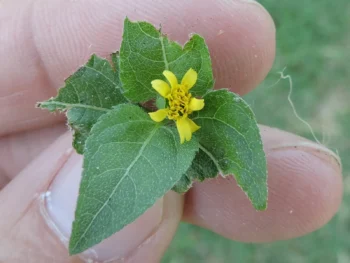
Straggler Daisy: A Cheerful Ground Cover with a Wandering Spirit
Meet the straggler daisy (Calyptocarpus vialis), a charming little perennial that’s made itself quite at home across the southern United States. With its sunny yellow blooms and easy-going nature, this low-growing plant has quietly spread from its Central and South American origins to become a familiar sight in gardens and wild spaces alike.
What Is Straggler Daisy?
Straggler daisy is a herbaceous perennial that lives up to its common name with a delightfully wandering growth habit. This member of the sunflower family produces small, bright yellow daisy-like flowers that seem to pop up wherever the plant decides to spread. As a forb, it lacks woody stems but makes up for it with persistent underground parts that help it return year after year.
Where You’ll Find It
Originally from Central and South America, straggler daisy has established itself across much of the southern and southwestern United States. You can find it growing in Alabama, Arizona, Arkansas, Florida, Georgia, Illinois, Louisiana, Mississippi, New Mexico, Oklahoma, South Carolina, Texas, and even as far as Hawaii and Guam. It’s particularly comfortable in zones 8-11, where mild winters allow it to thrive year-round.
- Species observed
- No observations
Garden Appeal and Characteristics
This little charmer typically grows 6-12 inches tall with a spreading habit that makes it excellent ground cover. The small yellow flowers may not be show-stoppers individually, but they create a cheerful carpet effect when the plant is happy and spreading. Its facultative wetland status means it’s quite adaptable—equally content in moist garden beds or drier locations.
Key features:
- Low-growing perennial with spreading habit
- Small, bright yellow daisy flowers
- Drought tolerant once established
- Adaptable to various soil conditions
- Blooms for extended periods
Should You Plant Straggler Daisy?
Here’s where things get interesting. Straggler daisy isn’t native to North America, but it’s also not considered invasive or problematic in most areas where it grows. It’s simply naturalized—meaning it’s found its niche and settled in without causing major ecological disruption.
If you’re drawn to its cheerful flowers and easy-care nature, straggler daisy can work well in informal garden settings, naturalized areas, or as ground cover where you want something that pretty much takes care of itself. However, if you’re passionate about supporting native ecosystems, you might consider some fantastic native alternatives instead.
Native Alternatives to Consider
Before planting straggler daisy, consider these native options that offer similar benefits:
- Lanceleaf coreopsis (Coreopsis lanceolata) – yellow flowers, drought tolerant
- Wild bergamot (Monarda fistulosa) – excellent pollinator plant
- Native asters – late-season color and wildlife benefits
- Regional native groundcovers specific to your area
Growing Straggler Daisy Successfully
If you decide to grow straggler daisy, you’ll find it refreshingly undemanding. This adaptable plant thrives in various soil types and, once established, tolerates drought quite well. It performs best in full sun to partial shade and doesn’t require rich, pampered soil to flourish.
Care tips:
- Plant in well-draining soil (though it tolerates various conditions)
- Water regularly during establishment, then reduce frequency
- Requires minimal fertilization
- May self-seed and spread naturally
- Deadhead spent flowers to encourage continued blooming
Pollinator and Wildlife Value
While not a native plant powerhouse for wildlife, straggler daisy does offer some benefits to small pollinators who visit its modest flowers. The extended blooming period provides a consistent, if not spectacular, source of nectar throughout the growing season.
The Bottom Line
Straggler daisy is one of those plants that’s neither hero nor villain in the garden world. It’s a pleasant, undemanding addition that won’t cause problems but won’t create a wildlife paradise either. If you’re looking for easy-care ground cover and don’t mind a non-native plant, it could work for you. But if you want to maximize your garden’s ecological impact, investing in native alternatives will give you more bang for your gardening buck—and better support for local wildlife too.