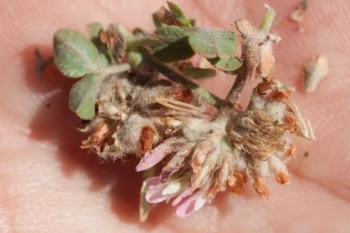
Strawberry Clover: The Quirky Ground Cover with Balloon-Like Seed Pods
Ever seen a clover that looks like it’s been inflated with tiny balloons? Meet strawberry clover (Trifolium fragiferum), a unique perennial ground cover that gets its charming common name from the puffy, strawberry-like appearance of its seed heads. While it may not be native to North America, this European transplant has certainly made itself at home across many states.
What Makes Strawberry Clover Special?
Strawberry clover stands out in the clover family thanks to its distinctive inflated seed pods that develop after the small purple flowers fade. These balloon-like structures give the plant an almost whimsical appearance that catches the eye long after blooming season ends. As a stoloniferous perennial, it spreads by creeping stems, forming dense mats that rarely exceed 6 inches in height.
Where You’ll Find It Growing
Originally native to Europe, the Mediterranean, and parts of Asia, strawberry clover has established itself across a wide swath of North America. You can find it growing in British Columbia, California, Colorado, Georgia, Idaho, Illinois, Iowa, Kansas, Montana, Nebraska, Nevada, New Jersey, New Mexico, New York, North Dakota, Oregon, Pennsylvania, Utah, Washington, and Wyoming.
- Species observed
- No observations
The Good, The Bad, and The Practical
Before you decide whether strawberry clover belongs in your garden, let’s weigh the pros and cons:
Why you might love it:
- Rapid growth rate and excellent ground coverage
- Fixes nitrogen in the soil, improving fertility naturally
- Attracts bees, butterflies, and other beneficial pollinators with its purple spring flowers
- Thrives in challenging conditions like salty soils
- Requires minimal maintenance once established
- Tolerates foot traffic reasonably well
Why you might think twice:
- As a non-native species, it doesn’t provide the same ecological benefits as native alternatives
- Can be aggressive in spreading, potentially crowding out other plants
- Has high moisture requirements, making it less suitable for drought-prone areas
- Short lifespan means you may need to replant periodically
Perfect Growing Conditions
Strawberry clover is surprisingly particular about its growing conditions, despite its reputation for toughness:
- Sunlight: Full sun (shade intolerant)
- Soil: Medium-textured soils with pH between 6.0-8.6
- Moisture: High water needs – loves consistently moist to wet conditions
- Climate: Hardy in USDA zones 3-9, needs at least 150 frost-free days
- Special tolerance: Handles salty conditions and occasional flooding well
Where It Fits in Your Landscape
This prostrate grower works best in informal, naturalized settings where its spreading habit won’t cause problems. Consider it for:
- Meadow gardens and wildflower areas
- Erosion control on slopes near water features
- Ground cover in consistently moist areas
- Soil improvement projects where you need nitrogen fixation
- Areas with poor or salty soil where other plants struggle
Planting and Care Made Simple
Getting strawberry clover established is refreshingly straightforward:
Planting: Sow seeds in spring at a rate of about 8-10 pounds per acre for large areas, or scatter more lightly for smaller spaces. Seeds are routinely available from commercial suppliers, with approximately 299,371 seeds per pound.
Establishment: Be patient – seedling vigor is low, so germination and early growth can be slow. Keep soil consistently moist during establishment.
Maintenance: Once established, this low-maintenance plant mostly takes care of itself. Occasional mowing can help control height and encourage denser growth. The moderate regrowth rate after cutting means it bounces back reasonably well.
Consider Native Alternatives
While strawberry clover isn’t considered invasive, native gardeners might prefer indigenous ground covers that better support local ecosystems. Consider native clovers, wild strawberries, or other regional ground covers that provide similar benefits while supporting native wildlife.
The Bottom Line
Strawberry clover offers a unique combination of ornamental appeal, soil improvement, and pollinator support, making it a practical choice for the right location. Its quirky inflated seed pods and reliable ground coverage can solve specific landscape challenges, especially in consistently moist, challenging soils. Just be sure you’re prepared for its spreading nature and high water needs, and consider whether a native alternative might better serve your local ecosystem.