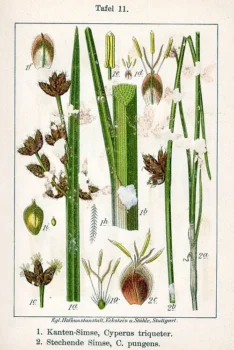
Streambank Bulrush: A Water-Loving Sedge for Wet Gardens
If you’re looking to add some grass-like texture to your water garden or consistently soggy yard spots, streambank bulrush (Schoenoplectus triqueter) might catch your eye. This perennial sedge brings a unique triangular-stemmed presence to wetland plantings, though there are some important things to know before adding it to your landscape.
What Is Streambank Bulrush?
Streambank bulrush is a clump-forming sedge that belongs to the same plant family as other rushes and sedges. Don’t let the grass-like description fool you – this isn’t actually a true grass, but rather a member of the sedge family (Cyperaceae). You might also see it listed under its older scientific names, including Scirpus triqueter.
The most distinctive feature of this plant is right there in its scientific name – triqueter refers to its three-sided or triangular stems, which set it apart from many other wetland plants. This perennial forms attractive clumps and has that classic sedge look that works beautifully in water-focused garden designs.
Native Status and Distribution
Here’s where things get interesting: streambank bulrush isn’t actually native to North America. Originally from Europe and Asia, it has established itself in parts of the Pacific Northwest, particularly in Oregon. While it reproduces on its own in the wild and seems to persist without human help, its invasive potential isn’t fully understood.
- Species observed
- No observations
Should You Plant Streambank Bulrush?
This is where gardeners need to think carefully. While streambank bulrush can be an attractive addition to wet areas, its non-native status means you might want to consider native alternatives first. Since we don’t have complete information about its potential to become invasive, it’s worth weighing your options.
If you do choose to plant it, consider these factors:
- It’s best suited for water gardens, pond margins, and rain gardens
- Works well in wetland restoration projects where appropriate
- Provides interesting textural contrast with its triangular stems
- Requires consistently wet conditions – not suitable for typical garden beds
Growing Conditions and Care
Streambank bulrush is definitely a water baby – it’s classified as an obligate wetland plant, meaning it almost always needs wetland conditions to thrive. Here’s what it needs to be happy:
- Moisture: Consistently moist to wet soil – think pond margins or areas that stay soggy
- Light: Full sun to partial shade
- Soil: Any soil type as long as it stays wet
- Climate: Hardy in USDA zones 7-10
Planting and Maintenance Tips
If you decide streambank bulrush is right for your wet garden spots, here’s how to give it the best start:
- Plant in spring when the soil is naturally moist
- Space plants according to how quickly you want coverage – they’ll spread to form clumps
- Ensure consistent moisture – this plant won’t forgive drought conditions
- Once established, it’s relatively low-maintenance
- Cut back old growth in late winter if desired
Wildlife and Ecosystem Value
While streambank bulrush can provide some habitat structure in wetland areas, its wildlife benefits aren’t as well-documented as those of native sedges. It’s wind-pollinated rather than insect-pollinated, so it won’t directly support pollinators like native flowering wetland plants might.
Native Alternatives to Consider
Before settling on streambank bulrush, consider these native options that provide similar wetland garden appeal:
- Native bulrush species (Schoenoplectus species native to your region)
- Native sedges (Carex species)
- Native rushes (Juncus species)
- Regional wetland grasses
The Bottom Line
Streambank bulrush can be an attractive addition to water gardens and consistently wet areas, but its non-native status means it’s worth considering native alternatives first. If you do choose to grow it, make sure you can provide the consistently wet conditions it absolutely requires. And as always, check with local native plant societies or extension services for the best native options for your specific region and growing conditions.
Remember, the best garden is one that works with your local ecosystem rather than against it – and sometimes that means choosing the native cousin over the exotic relative, even when both are perfectly lovely plants!