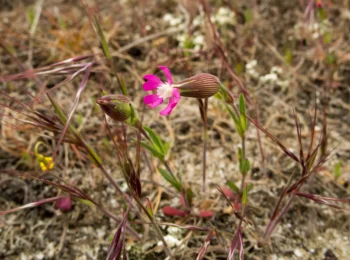
Striped Corn Catchfly: A Delicate European Annual Worth Considering
Meet the striped corn catchfly (Silene conica), a petite annual wildflower that’s quietly made itself at home across parts of North America. While this European native might not be on every gardener’s radar, its delicate pink blooms and easy-going nature make it worth a second look – especially if you’re creating a naturalized garden space or looking for low-maintenance flowering plants.
What Is Striped Corn Catchfly?
Striped corn catchfly is a small annual forb, meaning it’s a soft-stemmed herbaceous plant that completes its entire life cycle in one growing season. Despite its somewhat unusual common name, this plant has nothing to do with corn – the corn refers to grain fields where it was commonly found in its native Europe. The catchfly part comes from the sticky stems that can trap small insects, though not for carnivorous purposes like you might imagine!
Botanically known as Silene conica (and sometimes listed under the synonym Pleconax conica), this member of the carnation family produces charming small flowers with distinctively striped pink petals that give the plant its common name.
Where Does It Grow?
Originally from Europe and western Asia, striped corn catchfly has established populations across several U.S. states, including Colorado, Delaware, Illinois, Maryland, Massachusetts, Michigan, New Jersey, New York, Ohio, Oregon, and Washington. As a non-native species, it reproduces on its own in the wild without human intervention and has naturalized in many areas.
- Species observed
- No observations
The plant thrives in USDA hardiness zones 4-8, making it adaptable to a wide range of climates from the northern states down through much of the temperate regions.
Garden Appeal and Landscape Role
While striped corn catchfly may not win any awards for showy blooms, it offers a subtle charm that works beautifully in the right setting. The small pink flowers with their distinctive striped petals create a delicate, almost ethereal effect when planted in groups. Its compact growth form makes it suitable for:
- Wildflower gardens and meadow plantings
- Rock gardens where its drought tolerance shines
- Naturalized areas that mimic wild grasslands
- Front borders where its low profile won’t block other plants
Growing Conditions and Care
One of the best things about striped corn catchfly is how undemanding it can be. This adaptable annual prefers:
- Sunlight: Full sun to partial shade
- Soil: Well-drained soils (it’s quite drought tolerant once established)
- Water: Moderate moisture, but can handle dry spells
- Maintenance: Minimal care required
Planting and Propagation
Growing striped corn catchfly is refreshingly straightforward. Since it’s an annual, you’ll be starting from seed each year, though the plant often self-seeds if you let some flowers go to seed. Here’s how to get started:
- Direct sow seeds in fall or early spring
- Scatter seeds on prepared soil surface and lightly rake in
- Seeds need light to germinate, so don’t bury them deeply
- Water gently until seedlings establish
- Allow some plants to go to seed for natural reseeding
Benefits for Wildlife
While small, the flowers of striped corn catchfly do provide nectar for various pollinators, particularly smaller bees and butterflies. The seeds may also provide food for small birds, though it’s not considered a major wildlife plant.
Should You Plant It?
Striped corn catchfly occupies an interesting middle ground in the gardening world. As a non-native species that’s naturalized without becoming invasive, it can be a reasonable choice for certain garden situations, particularly if you’re creating a European-style wildflower meadow or need plants for challenging, dry sites.
However, if you’re focused on supporting native ecosystems and wildlife, you might want to consider native alternatives that provide similar aesthetic appeal while offering greater ecological benefits. Some native options to consider include:
- Wild bergamot (Monarda fistulosa) for similar-sized pink flowers
- Native catchflys like fire pink (Silene virginica) in eastern regions
- Regional native wildflowers appropriate for your specific area
The Bottom Line
Striped corn catchfly is a gentle, unassuming annual that can add delicate beauty to naturalized gardens and challenging sites. While it may not be the first choice for native plant enthusiasts, it’s not problematic enough to avoid entirely. If you do choose to grow it, enjoy its subtle charms while also making space for native plants that will provide even greater benefits to your local ecosystem.
Whether you’re drawn to its striped petals or its easy-care nature, striped corn catchfly proves that sometimes the most understated plants can find their own special place in the garden.