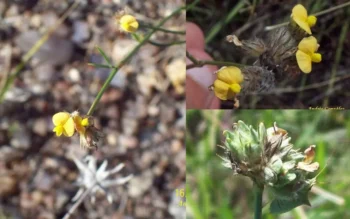
Stylosanthes montevidensis: A South American Ground Cover Worth Considering
If you’re hunting for an unusual ground cover that can handle tough conditions while adding a splash of sunny yellow to your landscape, Stylosanthes montevidensis might just be the plant you didn’t know you needed. This lesser-known member of the pea family brings some serious benefits to the garden table, though it’s definitely not your typical garden center find.
Also known by its synonym Stylosanthes juncea Micheli, this plant hails from the grasslands and open areas of South America, particularly Uruguay, Argentina, and southern Brazil. While it may not have a catchy common name that rolls off the tongue, don’t let that fool you into thinking it’s not worth your attention.
What Makes This Plant Special?
Stylosanthes montevidensis is like that reliable friend who doesn’t ask for much but always delivers. As a legume, it has the superpower of fixing nitrogen in the soil, essentially feeding itself while improving your garden’s dirt. The plant produces small, bright yellow pea-like flowers that create a cheerful carpet of color, and its compound leaves give it a delicate, almost fern-like appearance.
This low-growing perennial spreads to form dense mats, making it excellent for erosion control on slopes or as a living mulch in naturalized areas. It’s the kind of plant that thrives on neglect – perfect for those spots in your yard where you want something pretty but don’t want to fuss with high-maintenance care.
Where Does It Fit in Your Garden?
Think of Stylosanthes montevidensis as your go-to choice for:
- Wildflower meadows where you want subtle texture and color
- Naturalized areas that need stabilizing
- Low-maintenance landscape zones
- Areas where traditional grass struggles
- Pollinator gardens seeking diversity
The small yellow flowers are magnets for bees and other small pollinators, so you’ll be supporting local wildlife while solving your ground cover needs. It’s particularly valuable in warm-climate gardens where finding reliable, low-water ground covers can be challenging.
Growing Conditions and Care
Here’s where things get really easy. Stylosanthes montevidensis is happiest in USDA zones 8-11, so if you’re gardening in warm climates, you’re in luck. The plant craves full sun and well-draining soil – think Mediterranean conditions rather than boggy wetlands.
Once established, this little trooper is remarkably drought tolerant. In fact, overwatering is more likely to cause problems than underwatering. The plant’s nitrogen-fixing ability means you can skip the fertilizer – it’s literally making its own plant food.
Planting and Establishment Tips
Direct seeding works well with Stylosanthes montevidensis, though you might need to source seeds from specialty native plant suppliers or botanical collections. Scatter seeds in fall or early spring, barely covering them with soil since they need light to germinate.
Be patient during the first year – like many legumes, it takes time to establish its root system and nitrogen-fixing nodules. Once it settles in, though, it’ll reward your patience with reliable coverage and those cheerful yellow blooms.
A Word of Consideration
While Stylosanthes montevidensis isn’t considered invasive, it’s worth noting that this South American native isn’t going to provide the same ecosystem benefits as plants native to North America. If supporting local wildlife is a priority, consider pairing it with native alternatives like wild bergamot (Monarda fistulosa) for sun-loving areas, or native sedges for ground cover needs.
That said, for gardeners in warm climates looking for an unusual, low-maintenance ground cover that can handle tough conditions while supporting some pollinator activity, Stylosanthes montevidensis offers a unique option that’s certainly worth experimenting with in naturalized areas of your landscape.