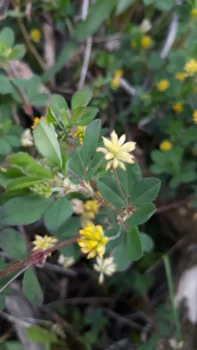
Suckling Clover: A Tiny Yellow Bloomer That’s Made Itself at Home
Meet suckling clover (Trifolium dubium), a petite annual that might just be hiding in your yard right now. This diminutive member of the legume family has quietly established itself across North America, bringing tiny bursts of yellow sunshine to lawns, roadsides, and wild spaces from spring through fall.
What Exactly Is Suckling Clover?
Suckling clover is a low-growing annual forb – essentially a soft-stemmed plant that completes its entire life cycle in one growing season. Unlike its woody cousins, this little clover stays close to the ground, spreading in a carpet-like fashion with its characteristic three-leaflet leaves and clusters of bright yellow flowers that are barely bigger than your pinky nail.
Originally hailing from Europe and western Asia, suckling clover has become a naturalized resident throughout the United States and Canada. While it’s not native to North America, it has adapted so well that you’ll find it thriving from Alaska to Hawaii and everywhere in between – including Alabama, Arizona, California, Florida, Texas, and dozens of other states and provinces.
- Species observed
- No observations
The Good, The Bad, and The Tiny
Here’s where things get interesting with suckling clover. As a non-native species, it occupies a gray area in the gardening world. It’s not considered invasive or particularly harmful, but it’s also not providing the specialized benefits that native plants offer to local ecosystems.
The positives:
- Excellent pollinator plant – bees and small butterflies love those tiny yellow blooms
- Fixes nitrogen in the soil, improving fertility naturally
- Extremely low maintenance once established
- Drought tolerant and adaptable to various soil types
- Provides ground cover in challenging spots
The considerations:
- Can self-seed aggressively and pop up where you don’t want it
- May compete with native wildflowers in naturalized areas
- Annual nature means it disappears in winter, leaving bare spots
Where Suckling Clover Thrives
This adaptable little plant is remarkably unfussy about its living conditions. Suckling clover typically prefers well-drained, upland sites – it’s classified as Obligate Upland in most regions, meaning you’ll rarely find it in wetlands or consistently moist areas.
It performs best in:
- Full sun to partial shade locations
- Sandy or loamy, well-draining soils
- USDA hardiness zones 3-10
- Areas with minimal foot traffic
Growing and Managing Suckling Clover
If you’re thinking about intentionally growing suckling clover, know that it’s almost embarrassingly easy to establish. This plant practically grows itself once conditions are right.
Planting: Direct seed in early spring after the last frost. Simply scatter seeds on prepared soil and lightly rake in – no need to bury them deeply.
Care: Minimal intervention required. Water during establishment, then let nature take its course. The plant will self-seed for following years if conditions remain favorable.
Management: If it spreads beyond where you want it, simply mow or pull plants before they set seed in late summer.
Design Ideas and Alternatives
Suckling clover works well in informal garden settings, naturalized meadows, or areas where you want low-maintenance ground cover with seasonal interest. Its small stature (typically under 6 inches tall) makes it suitable for filling gaps between stepping stones or softening the edges of pathways.
However, if you’re focused on supporting native ecosystems, consider these native alternatives that provide similar benefits:
- Wild lupine (Lupinus perennis) for nitrogen fixation and pollinator support
- Native clovers like purple prairie clover (Dalea purpurea)
- Low-growing native wildflowers specific to your region
The Bottom Line
Suckling clover occupies an interesting niche in the North American landscape – it’s naturalized enough to feel like it belongs, useful enough to appreciate, but foreign enough to give pause to native plant enthusiasts. Whether you choose to encourage it or replace it with native alternatives depends on your gardening philosophy and goals.
If you do decide to work with suckling clover, embrace its humble charm and easy-going nature. Just keep an eye on its spreading tendencies, and remember that supporting native plant communities is always the gold standard for ecological gardening.