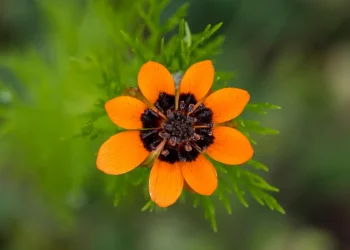
Summer Pheasant’s Eye: A Charming European Annual Worth Knowing
If you’ve ever stumbled across a patch of brilliant red flowers with feathery, delicate foliage in an unexpected corner of your garden, you might have encountered summer pheasant’s eye (Adonis aestivalis). This petite annual has been quietly making itself at home across parts of North America, bringing a touch of old-world charm wherever it appears.
What Exactly Is Summer Pheasant’s Eye?
Summer pheasant’s eye is a non-native annual forb that originally hails from Europe and western Asia. As a member of the buttercup family, it shares that characteristic bright, cheerful flower appearance that gardeners either love or love to hate. This little plant has managed to establish itself in eight U.S. states: California, Idaho, Missouri, Montana, New York, Oregon, Utah, and Washington, where it reproduces on its own without any help from humans.
- Species observed
- No observations
Don’t let the dramatic common name fool you—this isn’t a towering garden giant. Summer pheasant’s eye typically reaches just 12-18 inches tall, making it more of a delicate accent than a bold statement piece.
The Appeal Factor
What draws gardeners to this European transplant? The flowers are genuinely eye-catching—bright scarlet-red petals surrounding dark, almost black centers that create a striking contrast. The foliage is equally attractive, with finely dissected, feathery leaves that give the plant an almost ethereal quality. When in bloom from late spring through early summer, it creates lovely drifts of color that photograph beautifully.
Garden Role and Design Uses
Summer pheasant’s eye works best in informal garden settings where its naturalized appearance feels appropriate. Consider it for:
- Wildflower meadows and prairie-style plantings
- Cottage garden borders where a casual, self-seeding annual fits the aesthetic
- Rock gardens or areas with poor soil where other plants struggle
- Cut flower gardens (though the blooms are relatively short-lived)
Growing Conditions and Care
Here’s where summer pheasant’s eye becomes interesting for busy gardeners—it’s remarkably low-maintenance. This plant actually prefers poor to average, well-draining soil and full sun exposure. Rich, heavily fertilized soil can lead to excessive foliage growth at the expense of flowers.
Since it’s an annual, you can grow it in USDA hardiness zones 3-9, wherever it can complete its lifecycle before frost. The plant is quite drought-tolerant once established, making it suitable for xeriscaping or low-water gardens.
Planting and Propagation Tips
The easiest approach is direct seeding in either fall or early spring. Summer pheasant’s eye doesn’t transplant well due to its taproot, so starting from seed in place is your best bet. Simply scatter seeds over prepared soil and rake lightly to cover. The plant will often self-seed for future years, though germination can be sporadic.
One quirky characteristic: the seeds can remain dormant in soil for several years, then suddenly germinate when conditions are right. Don’t be surprised if you see surprise appearances years after your initial planting!
Pollinator and Wildlife Benefits
While summer pheasant’s eye does attract bees and other beneficial insects during its blooming period, its non-native status means it doesn’t provide the same ecological benefits as native alternatives. The flowers offer nectar and pollen, but native insects and wildlife haven’t co-evolved with this plant over thousands of years.
Should You Plant It?
This is where things get interesting. Summer pheasant’s eye isn’t considered invasive, but it’s also not contributing to local ecosystem health the way native plants do. If you’re drawn to its appearance, consider these factors:
Reasons you might choose it: Low maintenance, drought tolerance, interesting self-seeding behavior, and unique flower color that’s hard to find in many native alternatives.
Why you might skip it: Limited ecological benefits, unpredictable germination, and the availability of native alternatives that provide similar aesthetic appeal.
Native Alternatives to Consider
If you love the idea of bright red annual flowers with delicate foliage, consider these native options instead:
- Scarlet flax (Linum grandiflorum var. rubrum) for similar red flowers
- Cardinal flower (Lobelia cardinalis) for brilliant red blooms
- Indian paintbrush (Castilleja species) for red-orange flower spikes
- Bee balm (Monarda species) for red flowers that absolutely delight pollinators
The Bottom Line
Summer pheasant’s eye occupies an interesting middle ground in the gardening world. It’s not aggressive enough to be problematic, but it’s not native enough to be an ecological powerhouse. If you encounter it growing wild or find seeds available, it can be a charming addition to informal garden areas—just remember that choosing native alternatives will better support your local ecosystem while often providing equally beautiful results.
Whether you grow it or not, summer pheasant’s eye serves as a good reminder that our gardens are complex ecosystems where plants from around the world intersect with local wildlife, weather, and growing conditions in endlessly fascinating ways.