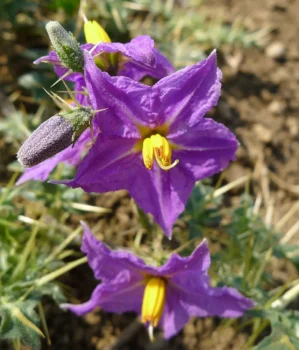
Surattense Nightshade: What You Need to Know About This Non-Native Wildflower
If you’ve stumbled across a spiny little plant with purple flowers in Maryland, you might be looking at Surattense nightshade (Solanum virginianum). This interesting member of the nightshade family has quite the story to tell, and as gardeners, it’s worth understanding what we’re dealing with when we encounter this non-native species.
Getting to Know Surattense Nightshade
Surattense nightshade goes by its scientific name Solanum virginianum, though you might also see it listed under the synonym Solanum surattense. This annual forb—that’s garden-speak for a non-woody plant—originally hails from tropical Asia but has found its way to North American soils.
As a member of the nightshade family, it shares relatives with tomatoes, potatoes, and peppers, though this particular cousin is definitely more of the wild and scrappy type rather than the dinner table variety.
Where You’ll Find It
Currently, Surattense nightshade has been documented growing in Maryland, where it has established itself and reproduces without human assistance. This non-native species has proven it can survive and spread on its own in our region.
- Species observed
- No observations
What Does It Look Like?
This annual plant presents itself as a somewhat unassuming forb—meaning it lacks significant woody tissue and keeps its growing points at or below ground level. The plant features:
- Small purple flowers with bright yellow centers
- Spiny stems and leaves (handle with care!)
- A somewhat weedy, informal appearance
- Annual growth habit, completing its life cycle in one growing season
Should You Plant It in Your Garden?
Here’s where things get a bit complicated. While Surattense nightshade isn’t officially listed as invasive, it is a non-native species that reproduces freely in the wild. For most home gardeners, this plant doesn’t offer significant ornamental value and may not be the best choice for typical landscape designs.
If you’re interested in supporting local ecosystems, consider these native alternatives instead:
- Wild bergamot (Monarda fistulosa) for purple blooms
- New England aster (Symphyotrichum novae-angliae) for late-season color
- Purple coneflower (Echinacea purpurea) for reliable perennial beauty
Growing Conditions and Care
If you do encounter this plant or decide to grow it for botanical interest, Surattense nightshade is relatively low-maintenance:
- Light: Prefers full sun locations
- Soil: Adapts to various soil types, including poor conditions
- Water: Tolerates drought once established
- Hardiness: As an annual, it’s not about cold tolerance but rather growing season length
Keep in mind that this plant can self-seed readily, so if you’re growing it, be prepared to manage volunteers in subsequent seasons.
Wildlife and Pollinator Value
While the small purple flowers may attract some pollinators, native plants typically provide much better support for local wildlife. Our native bees, butterflies, and other beneficial insects have co-evolved with indigenous plants and depend on them for optimal nutrition and lifecycle support.
The Bottom Line
Surattense nightshade is an interesting botanical specimen, but for most gardeners focused on creating beautiful, ecologically supportive landscapes, native alternatives will serve you better. If you encounter this plant in the wild, now you’ll know what you’re looking at. And if you’re drawn to its modest purple blooms, consider channeling that interest toward native plants that offer similar aesthetic appeal with greater ecological benefits.
Remember, every plant choice we make in our gardens is a vote for the kind of ecosystem we want to support. When in doubt, going native is usually the way to go!