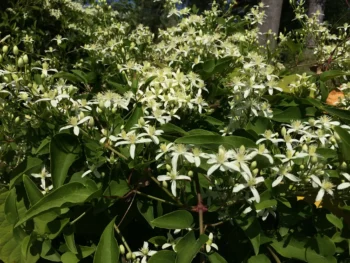
Sweet Autumn Virginsbower: A Beautiful But Problematic Vine
If you’ve ever noticed clouds of small, fragrant white flowers cascading over fences and trees in late summer, you’ve likely encountered sweet autumn virginsbower (Clematis terniflora). While this perennial climbing vine certainly knows how to put on a show, there’s more to this plant than meets the eye – and not all of it is good news for gardeners and ecosystems.
What Is Sweet Autumn Virginsbower?
Sweet autumn virginsbower is a vigorous twining and climbing vine that can reach impressive heights when given the chance. This perennial produces woody or herbaceous stems that can quickly cover large areas, making it both appealing and concerning depending on your perspective.
The plant’s claim to fame comes in late summer and early fall when it produces masses of small, four-petaled white flowers that fill the air with a sweet fragrance. These blooms are followed by equally showy feathery seed heads that persist into winter, adding textural interest to the landscape.
The Not-So-Sweet Truth: Invasive Status
Here’s where we need to have a serious conversation. Despite its undeniable beauty, sweet autumn virginsbower is classified as invasive in several states, including:
- Alabama (Category 2 invasive)
- Delaware (Invasive)
- Missouri (Invasive)
- New Jersey (Regulated)
- North Carolina (Invasive)
This non-native species, originally from northeastern Asia, has proven a little too successful at making itself at home across North America. It now grows wild in over 30 states and parts of Canada, reproducing spontaneously without human help and often displacing native plants.
Where You’ll Find It
Sweet autumn virginsbower has established populations across a vast range, including Alabama, Arkansas, California, Connecticut, Delaware, Florida, Georgia, Illinois, Indiana, Kansas, Kentucky, Louisiana, Maryland, Massachusetts, Minnesota, Mississippi, Missouri, Nebraska, New Hampshire, New Jersey, New York, North Carolina, Ohio, Oklahoma, Pennsylvania, Rhode Island, South Carolina, Tennessee, Texas, Vermont, Virginia, West Virginia, and Ontario, Canada.
- Species observed
- No observations
Growing Characteristics
This vine is remarkably adaptable, which partly explains its invasive success. Sweet autumn virginsbower typically has a Facultative Upland wetland status in most regions, meaning it usually grows in non-wetland areas but can tolerate some moisture. In the Midwest and Northcentral/Northeast regions, it’s classified as Obligate Upland, almost never occurring in wetlands.
The plant thrives in USDA hardiness zones 4-9 and tolerates a wide range of growing conditions, from full sun to partial shade and various soil types. Once established, it’s quite drought tolerant, making it a formidable competitor against native species.
Why We Don’t Recommend Planting It
While sweet autumn virginsbower does attract pollinators like bees and butterflies with its nectar-rich flowers, the environmental costs outweigh the benefits. Its aggressive growth habit allows it to smother native plants, climb high into trees, and alter natural ecosystems.
For gardeners, this translates to a plant that requires constant management to prevent it from taking over your landscape – and potentially escaping into natural areas.
Better Native Alternatives
Instead of sweet autumn virginsbower, consider these native climbing alternatives that provide similar benefits without the ecological concerns:
- Virgin’s bower (Clematis virginiana) – A native clematis with similar white flowers
- American groundnut (Apios americana) – Offers fragrant flowers and attracts pollinators
- Wild grape species (Vitis species) – Provides food for wildlife and fall color
- Trumpet vine (Campsis radicans) – Showy orange-red flowers beloved by hummingbirds
If You Already Have It
If sweet autumn virginsbower is already established on your property, the best approach is careful management or removal. The plant can be cut back hard in late winter or early spring, but you’ll need to stay on top of new growth. For complete removal, you may need to dig up the root system or use targeted herbicide applications.
Always dispose of plant material responsibly – don’t compost it or dump it in natural areas where it might establish new populations.
The Bottom Line
Sweet autumn virginsbower is undoubtedly beautiful, but beauty shouldn’t come at the cost of ecological health. With so many wonderful native alternatives available, there’s really no need to risk introducing or maintaining this invasive species in your landscape. Your local ecosystems – and your future self – will thank you for choosing native plants that provide beauty without the environmental baggage.