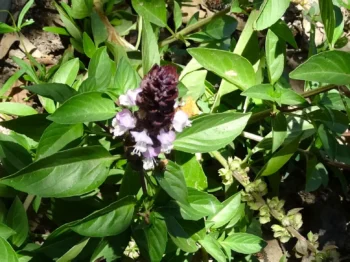
Sweet Basil: The Beloved Herb That’s Not Actually Native
If you’ve ever grown herbs in your garden, chances are you’ve encountered sweet basil (Ocimum basilicum). This aromatic superstar has won over gardeners across America with its fragrant leaves and culinary versatility. But here’s something that might surprise you: despite being a garden staple, sweet basil isn’t actually native to North America!
What Exactly Is Sweet Basil?
Sweet basil is an annual herb (though it can be perennial in very warm climates) that belongs to the mint family. As a forb, it’s a non-woody plant that puts all its energy into producing those gorgeous, aromatic leaves we love so much. The plant typically grows in a compact, bushy form with bright green, oval-shaped leaves and eventually produces small white flower spikes that pollinators absolutely adore.
Where Sweet Basil Calls Home
Originally hailing from tropical regions of Central Africa and Southeast Asia, sweet basil has made itself quite comfortable in many parts of the United States. You’ll find it growing (and sometimes naturalizing) in Arizona, Connecticut, Florida, Hawaii, Illinois, Louisiana, Massachusetts, Missouri, New York, North Carolina, Pennsylvania, Rhode Island, South Carolina, Virginia, Wisconsin, and Puerto Rico.
- Species observed
- No observations
The plant has established itself as a non-native species that can reproduce and persist in the wild in these areas, though it’s not considered invasive or particularly problematic.
Why Gardeners Love (and Grow) Sweet Basil
Let’s be honest—sweet basil has earned its place in American gardens for good reason. Here’s why gardeners keep coming back to this non-native herb:
- Culinary goldmine: From pesto to pizza, sweet basil is a kitchen essential
- Pollinator magnet: Those small white flowers attract bees, butterflies, and beneficial insects
- Easy to grow: Perfect for beginners and experienced gardeners alike
- Container-friendly: Thrives in pots, making it perfect for small spaces
- Quick results: Fast-growing with leaves ready to harvest in just weeks
Growing Sweet Basil Successfully
Getting Started
Sweet basil is quite the sun worshipper and prefers full sunlight with well-draining soil. Since it’s an annual in most areas (only surviving as a perennial in USDA zones 10-11), you’ll need to replant each year after the last frost has passed.
Planting and Care Tips
- Start seeds indoors 6-8 weeks before the last frost, or direct sow after soil warms
- Space plants 12-18 inches apart to allow for bushy growth
- Water regularly but avoid soggy soil—basil hates wet feet
- Pinch off flower buds to keep the plant producing tender leaves
- Harvest frequently by pinching or cutting stems just above leaf pairs
Where It Grows Best
Sweet basil’s wetland status varies by region, but it generally prefers upland conditions and rarely tolerates wet soils. It’s most at home in:
- Herb gardens
- Kitchen gardens
- Container gardens
- Raised beds with good drainage
- Sunny windowsills (for indoor growing)
Should You Grow Sweet Basil?
While sweet basil isn’t native, it’s also not considered invasive or harmful to local ecosystems. If you enjoy cooking and want an easy, productive herb for your garden, sweet basil can be a perfectly reasonable choice. However, if you’re passionate about supporting native ecosystems, you might want to consider some native alternatives.
Native Herb Alternatives to Consider
If you’re looking to go fully native with your herb garden, consider these indigenous aromatic plants:
- Wild bergamot (Monarda fistulosa): Native mint family member with edible leaves
- American wild mint (Mentha canadensis): Our continent’s own minty native
- Nodding onion (Allium cernuum): Native bulb with onion-flavored leaves
- Wild ginger (Asarum canadense): Ground-covering native with spicy roots
The Bottom Line
Sweet basil may not be native, but it’s earned its place in American gardens through sheer usefulness and charm. Whether you choose to grow this beloved herb or opt for native alternatives, the most important thing is that you’re getting out there and gardening. After all, any garden that brings you joy and connects you with nature is a good garden—native plants or not!