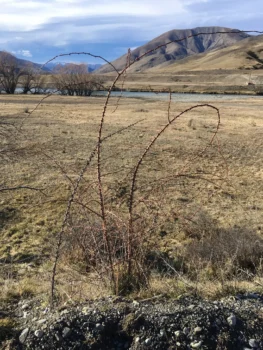
Sweetbriar Rose: A Fragrant Non-Native with Old-World Charm
If you’ve ever caught a whiff of apple-scented leaves while walking past an old garden hedge, you may have encountered the sweetbriar rose (Rosa rubiginosa). This charming European native has made itself quite at home across North America, bringing a touch of old-world romance to landscapes from coast to coast.
What Makes Sweetbriar Rose Special?
Sweetbriar rose isn’t your typical garden rose. This perennial shrub grows as a compact, multi-stemmed plant that typically stays under 1.5 feet tall, though it can occasionally reach up to 3 feet at maturity. What really sets it apart is its delightfully fragrant foliage – crush a leaf between your fingers and you’ll understand why it’s sometimes called the eglantine rose.
In early summer, the plant produces conspicuous red flowers that attract bees, butterflies, and other pollinators to your garden. Come fall, you’ll be treated to a show of bright purple fruit (rose hips) that persist into winter, providing visual interest when most other plants have gone dormant.
Where Does Sweetbriar Rose Grow?
Originally from Europe, western Asia, and northwestern Africa, sweetbriar rose has established itself across an impressive range in North America. You can find it thriving in Alabama, Arkansas, California, Colorado, Connecticut, Delaware, Georgia, Idaho, Illinois, Indiana, Iowa, Kansas, Kentucky, Maine, Maryland, Massachusetts, Michigan, Minnesota, Mississippi, Missouri, Montana, Nebraska, New Hampshire, New Jersey, New York, North Carolina, Ohio, Oklahoma, Oregon, Pennsylvania, Rhode Island, South Carolina, Tennessee, Texas, Utah, Vermont, Virginia, Washington, West Virginia, Wisconsin, and Wyoming. It’s also found in several Canadian provinces including British Columbia, New Brunswick, Nova Scotia, Ontario, Quebec, and Newfoundland.
- Species observed
- No observations
Growing Conditions and Care
One of the reasons sweetbriar rose has spread so successfully is its adaptability. This tough little shrub handles a wide range of conditions:
- Hardiness: Zones 4-8 (can tolerate temperatures down to -33°F)
- Soil: Adapts to coarse, medium, and fine-textured soils with pH between 5.2 and 7.5
- Water: Moderate moisture needs with medium drought tolerance
- Sun: Intolerant of shade – needs full sun to thrive
- Wetlands: Strongly prefers upland areas and almost never occurs in wetlands
The plant grows at a moderate rate and can reach 10 feet in height after 20 years if left unpruned, though most gardeners keep it much shorter through regular maintenance.
Planting and Care Tips
Getting started with sweetbriar rose is relatively straightforward:
- Planting: Available as bare root plants or in containers. Plant 2,700 to 4,800 plants per acre if creating a hedge or naturalized planting
- Propagation: Can be grown from seed (about 31,000 seeds per pound) or propagated from bare root stock
- Spacing: Give plants room to spread as they have a moderate vegetative spread rate
- Maintenance: Prune after flowering to maintain shape. The plant resprouts well if cut back
- Fertilizing: Has medium fertility requirements – avoid over-fertilizing
Garden Design and Landscape Uses
Sweetbriar rose works beautifully in several garden styles:
- Cottage gardens: Perfect for that informal, romantic look
- Wildlife gardens: Flowers feed pollinators while hips provide food for birds
- Fragrant gardens: The apple-scented foliage adds another sensory dimension
- Hedgerows: Creates an effective barrier with moderate hedge tolerance
- Naturalized areas: Fits well in informal, low-maintenance landscapes
Should You Plant Sweetbriar Rose?
While sweetbriar rose has many appealing qualities, it’s important to remember that this is a non-native species. Though it’s not currently classified as invasive in most areas, it has established wild populations throughout much of North America. If you’re looking to support native ecosystems, consider these native rose alternatives instead:
- Wild rose (Rosa woodsii) for western regions
- Carolina rose (Rosa carolina) for eastern areas
- Prairie rose (Rosa arkansana) for Great Plains regions
- Swamp rose (Rosa palustris) for wetter areas
If you do choose to grow sweetbriar rose, enjoy its unique fragrance and old-world charm while being mindful not to let it escape cultivation into natural areas. With proper care and consideration, this aromatic beauty can add a special touch to the right garden setting.