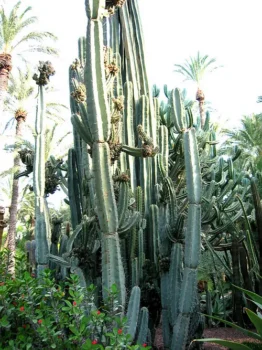
Sweetpotato Cactus: A Striking Architectural Plant for Warm Climate Gardens
If you’re looking to add some serious drama to your landscape, the sweetpotato cactus (Cereus) might just be the showstopper you’ve been searching for. This perennial shrub brings a bold, architectural presence to gardens with its distinctive columnar form and impressive nighttime floral displays.
What Makes Sweetpotato Cactus Special?
The sweetpotato cactus is a multi-stemmed woody shrub that typically grows less than 13-16 feet in height, though it can occasionally grow taller under ideal conditions. What sets this cactus apart is its striking vertical growth habit and ribbed stems that create interesting shadows and textures throughout the day. But the real magic happens after dark—this night-blooming beauty produces spectacular white flowers that unfurl in the evening, creating a moonlit garden spectacle.
Where Does It Grow?
Currently, sweetpotato cactus has established populations in Hawaii and Puerto Rico, where it’s considered a non-native species that reproduces spontaneously in the wild. While it’s not originally from these locations, it has adapted well to these tropical and subtropical environments.
- Species observed
- No observations
Should You Plant Sweetpotato Cactus?
The decision to plant sweetpotato cactus depends on your garden goals and location. Here are some considerations:
Reasons You Might Love It:
- Dramatic architectural form adds instant structure to landscapes
- Spectacular night-blooming flowers create evening garden interest
- Low-maintenance once established
- Excellent for xeriscaping and water-wise gardens
- Night flowers attract fascinating pollinators like moths and bats
Things to Consider:
- It’s not native to most areas where it’s grown
- Limited cold tolerance restricts growing regions
- Sharp spines require careful placement away from foot traffic
- Large size at maturity needs adequate space
Growing Conditions and Care
Sweetpotato cactus thrives in conditions that mimic its preferred habitat:
Ideal Growing Conditions:
- Sunlight: Full sun for best growth and flowering
- Soil: Well-draining soil is absolutely critical—soggy conditions will kill this plant
- Water: Drought tolerant once established; water sparingly
- Climate: Best suited for USDA zones 9-11
- Space: Allow plenty of room for mature size
Planting and Care Tips:
- Plant in spring after last frost danger has passed
- Ensure excellent drainage by amending heavy soils with sand or gravel
- Water deeply but infrequently—let soil dry completely between waterings
- Protect from frost in marginal areas or grow in containers that can be moved
- Fertilize sparingly with low-nitrogen cactus fertilizer during growing season
- Watch for scale insects and mealybugs, especially on container plants
Garden Design Ideas
Sweetpotato cactus works beautifully in:
- Desert and xeriscape gardens as a focal point
- Mediterranean-style landscapes
- Container gardens (choose large, heavy pots)
- Modern architectural landscapes where clean lines are desired
- Moon gardens designed for evening enjoyment
Consider Native Alternatives
If you’re passionate about supporting local ecosystems, consider researching native columnar cacti or architectural plants specific to your region. Native plants typically require less water and maintenance while providing better support for local wildlife and pollinators.
The Bottom Line
Sweetpotato cactus can be a stunning addition to warm-climate gardens, especially for gardeners who appreciate bold, sculptural plants and nighttime garden drama. While it’s not native to most areas where it’s grown, it can be a responsible choice when properly cared for and contained. Just remember—this is a plant that demands respect for its space requirements and sharp defenses, but rewards patient gardeners with years of architectural beauty and spectacular nocturnal blooms.