Sweet-Scented Bedstraw: A Fragrant Groundcover for Shady Spots
If you’ve ever wandered through a European woodland in late spring and caught a whiff of something delightfully sweet and vanilla-like, you may have encountered sweet-scented bedstraw (Galium odoratum). This charming little groundcover has been winning over gardeners for centuries with its star-shaped flowers and irresistible fragrance.
What Is Sweet-Scented Bedstraw?
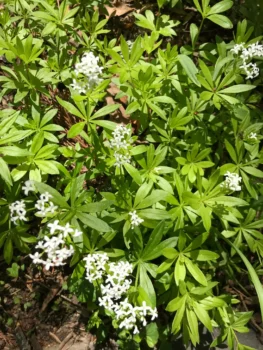
Sweet-scented bedstraw, also known by its botanical name Galium odoratum (formerly Asperula odorata), is a perennial forb that forms dense, carpet-like mats in shaded areas. This herbaceous plant lacks woody tissue and produces its delicate white flowers in clusters above bright green, lance-shaped leaves arranged in attractive whorls around the stem.
The plant gets its common name from its historical use as stuffing for mattresses – the dried leaves release a sweet, hay-like fragrance that was thought to promote restful sleep. Even today, when you brush against the foliage or crush the leaves, you’ll be treated to that distinctive vanilla scent.
Native Status and Distribution
While sweet-scented bedstraw has naturalized beautifully in North American gardens, it’s important to know that this species is not native to our continent. Originally from European and Asian woodlands, it has established itself across many states and provinces, including British Columbia, Ontario, Quebec, and numerous U.S. states from the Pacific Northwest to the Eastern Seaboard, including Colorado, Delaware, Georgia, Maryland, Massachusetts, Michigan, Minnesota, New Jersey, New York, North Carolina, Ohio, Oregon, Pennsylvania, Rhode Island, Virginia, and Washington.
- Species observed
- No observations
The plant reproduces and persists in the wild without human intervention, though it’s not currently classified as invasive in most regions.
Why Gardeners Love (and Sometimes Question) Sweet-Scented Bedstraw
There’s a lot to appreciate about this European transplant:
- Excellent groundcover: It forms dense mats that suppress weeds naturally
- Shade tolerance: Thrives in areas where many other plants struggle
- Fragrant appeal: The sweet scent adds sensory interest to woodland gardens
- Low maintenance: Once established, it requires minimal care
- Attractive appearance: Delicate white flowers and neat foliage create an elegant carpet
However, some gardeners prefer to focus on native alternatives that provide greater benefits to local wildlife and ecosystems. While sweet-scented bedstraw does attract some beneficial insects and small pollinators, native groundcovers typically offer superior habitat and food sources for local fauna.
Growing Conditions and Care
Sweet-scented bedstraw is remarkably adaptable, but it performs best under specific conditions:
Light requirements: Partial to full shade – this isn’t a plant for sunny spots
Soil needs: Moist, well-draining soil with a slightly alkaline pH, though it tolerates various soil types
Hardiness zones: USDA zones 4-8, making it suitable for most temperate regions
Moisture: Consistent moisture is key, but avoid waterlogged conditions
Planting and Establishment Tips
Getting sweet-scented bedstraw established is straightforward:
- Timing: Plant in spring or fall for best establishment
- Spacing: Place plants 12-18 inches apart – they’ll fill in relatively quickly
- Soil preparation: Amend heavy clay soils with compost to improve drainage
- Watering: Keep consistently moist during the first growing season
- Mulching: A light layer of organic mulch helps retain moisture
The plant spreads via underground rhizomes, so be patient – it may take a season or two to form the lush carpet you’re after.
Landscape Uses
Sweet-scented bedstraw shines in several garden settings:
- Woodland gardens: Perfect under mature trees and large shrubs
- Shade borders: Excellent front-of-border plant for shaded areas
- Cottage gardens: Adds old-world charm with its historical significance
- Living mulch: Suppresses weeds while looking attractive
- Naturalized areas: Works well in informal, low-maintenance landscapes
Wildlife and Pollinator Benefits
While sweet-scented bedstraw does provide some benefits to wildlife, attracting small beneficial insects and occasional native bees, it’s worth considering that native alternatives typically offer superior support for local ecosystems. The plant’s small white flowers provide nectar for tiny pollinators, but the overall wildlife value is modest compared to indigenous species.
Consider Native Alternatives
If you’re interested in supporting local wildlife while achieving similar aesthetic goals, consider these native groundcover alternatives:
- Wild ginger (Asarum canadense): Excellent shade groundcover with interesting heart-shaped leaves
- Wintergreen (Gaultheria procumbens): Evergreen groundcover with berries that feed wildlife
- Wild strawberry (Fragaria virginiana): Delicate white flowers and edible berries
- Bunchberry (Cornus canadensis): Striking white flowers and red berries
The Bottom Line
Sweet-scented bedstraw can be a lovely addition to shaded gardens, offering reliable groundcover, attractive appearance, and that wonderful fragrance. While it’s not native to North America, it’s generally well-behaved in the landscape and isn’t considered problematically invasive in most regions.
Whether you choose this European charmer or opt for native alternatives, the key is creating a garden that brings you joy while being mindful of your local ecosystem. If you do decide to grow sweet-scented bedstraw, you’ll be rewarded with a low-maintenance groundcover that’s been enchanting gardeners for generations.