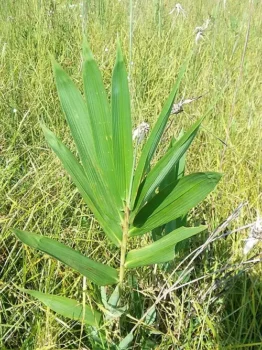
Switchcane: The Native Bamboo That’s Perfect for Wet Spots
If you’ve been scratching your head wondering what to plant in that perpetually soggy corner of your yard, let me introduce you to switchcane (Arundinaria tecta). This native bamboo might just be the answer to your wetland woes – though it comes with a few quirks you’ll want to know about first.
What Exactly Is Switchcane?
Switchcane is a perennial native bamboo that’s been quietly doing its thing across the southeastern United States for centuries. Unlike its towering cousin giant cane, switchcane keeps things modest, typically staying under 1.5 feet tall and rarely exceeding 3 feet at maturity. Think of it as the well-behaved younger sibling in the bamboo family.
You might also see it listed under some tongue-twisting synonyms like Arundinaria gigantea ssp. tecta or Arundo tecta, but switchcane rolls off the tongue much easier, don’t you think?
Where Does Switchcane Call Home?
This native gem has quite an impressive range, stretching across 16 states from New Jersey down to Florida and as far west as Texas and Oklahoma. You’ll find it naturally growing in Alabama, Arkansas, Florida, Georgia, Louisiana, Maryland, Mississippi, North Carolina, Pennsylvania, South Carolina, Tennessee, and Virginia too.
- Species observed
- No observations
Why Your Garden Might Love Switchcane
Here’s where switchcane really shines – it’s a moisture-loving plant that thrives where many others would throw in the towel. With its Facultative Wetland status across multiple regions, this bamboo actually prefers those wet feet that would rot out most other plants.
The plant offers several appealing qualities:
- Dense, fine-textured foliage that provides year-round interest
- Rapid growth rate once established
- Excellent for erosion control on wet slopes
- Fire-resistant qualities
- Creates naturalized colonies that blend beautifully into woodland settings
The Perfect Spot for Switchcane
Switchcane is ideal for:
- Rain gardens and bioswales
- Wetland restoration projects
- Naturalized woodland edges
- Areas with poor drainage
- Erosion-prone slopes near water features
This isn’t the plant for formal gardens or manicured landscapes. Switchcane has a wild, naturalized appearance that works best when you’re trying to recreate native ecosystems or solve drainage problems.
Growing Conditions: What Makes Switchcane Happy
Switchcane is surprisingly specific about its preferred growing conditions:
Soil: It loves fine to medium-textured soils but turns its nose up at coarse, sandy conditions. The plant prefers acidic soils with a pH between 4.5 and 7.0.
Moisture: High moisture use is this plant’s calling card. It has low drought tolerance, so don’t expect it to survive dry spells without supplemental watering.
Light: Interestingly, switchcane is shade intolerant, preferring full sun to light shade despite its wetland preferences.
Climate: It needs at least 250 frost-free days and annual precipitation between 45-60 inches. Hardy in USDA zones 6-10, it can handle temperatures down to about -3°F.
Planting and Care Tips
Here’s the straightforward scoop on growing switchcane successfully:
Propagation: Unfortunately, switchcane isn’t commercially available from most nurseries, so you’ll likely need to source rhizome divisions from other gardeners or conservation groups. Seeds are rarely produced and have poor viability.
Planting: Spring is your best bet for planting. Space divisions 3-6 feet apart, though the plant will fill in quickly with its rhizomatous growth habit.
Maintenance: Once established, switchcane requires minimal care beyond ensuring adequate moisture. Its rapid vegetative spread rate means it can colonize areas quickly – which might be exactly what you want for erosion control, but keep this in mind for smaller spaces.
A Few Words of Caution
While switchcane isn’t invasive outside its native range, it does spread rapidly through underground rhizomes. This makes it fantastic for large naturalized areas but potentially overwhelming for small garden spaces. Consider installing root barriers if you want to contain its spread.
The plant also has low tolerance for foot traffic and doesn’t respond well to frequent cutting, so it’s not suitable for high-use areas.
Wildlife and Ecological Benefits
While specific wildlife benefits aren’t well-documented for switchcane, native bamboos traditionally provide nesting sites for birds and cover for small mammals. The dense colonies create microhabitats that support various insects and provide erosion control that benefits entire watersheds.
The Bottom Line
Switchcane is a specialized plant for specialized situations. If you have wet, sunny areas where you want to establish native vegetation for erosion control or habitat restoration, it’s an excellent choice. Just make sure you understand its spreading nature and moisture requirements before planting.
For gardeners dealing with challenging wet sites, switchcane offers a native solution that works with your landscape’s natural conditions rather than fighting against them. Sometimes the best gardening approach is simply letting native plants do what they do best.