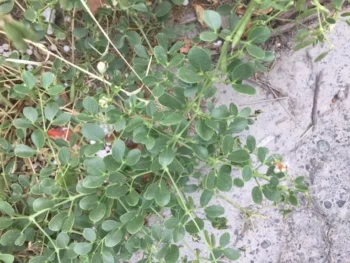
Syrian Beancaper: A Hardy Mediterranean Import for Dry Gardens
If you’re looking for a tough, drought-tolerant plant that can handle harsh conditions with grace, Syrian beancaper (Zygophyllum fabago) might catch your eye. This Mediterranean native has quietly made itself at home across several U.S. states, bringing its distinctive paired leaves and small flowers to gardens that need low-maintenance options.
What Is Syrian Beancaper?
Syrian beancaper is a perennial herb that belongs to the caltrop family. Despite its common name suggesting Middle Eastern origins, this adaptable plant actually hails from the broader Mediterranean region, including parts of Asia and North Africa. It’s what botanists call a forb – essentially a non-woody plant that comes back year after year, storing energy in underground parts to survive tough conditions.
The plant gets its beancaper name from its distinctive paired leaflets that somewhat resemble beans, though it’s not related to either beans or capers. Its scientific name, Zygophyllum fabago, literally means paired leaves, which perfectly describes one of its most recognizable features.
Where Does It Grow?
As a non-native species that has naturalized in North America, Syrian beancaper has established populations across a surprising range of states, from the arid Southwest to unexpected locations in the Northeast. You can find it growing wild in California, Colorado, Idaho, Kansas, Montana, Nevada, New Mexico, New York, Pennsylvania, Texas, and Washington.
- Species observed
- No observations
Should You Plant Syrian Beancaper?
Here’s where things get interesting. Syrian beancaper is undeniably tough and requires virtually no care once established, making it tempting for gardeners in challenging climates. However, since it’s not native to North America, it doesn’t provide the same ecological benefits as indigenous plants.
Potential Benefits:
- Extremely drought tolerant once established
- Thrives in poor, rocky soils
- Requires minimal maintenance
- Produces small, delicate flowers
- Can handle temperature extremes
Things to Consider:
- Not native to North America
- Limited wildlife and pollinator value compared to native alternatives
- May self-seed and spread beyond intended areas
- Relatively modest visual impact
Native Alternatives to Consider
Before choosing Syrian beancaper, consider these native alternatives that offer similar drought tolerance with greater ecological benefits:
- Desert willow (Chilopsis linearis) for southwestern gardens
- Blanket flower (Gaillardia species) for colorful, low-water options
- Native sedums and stonecrops for succulent-like appearance
- Regional native bunch grasses for groundcover
Growing Syrian Beancaper Successfully
If you decide to grow Syrian beancaper, the good news is that it’s remarkably easy to please. This plant practically thrives on neglect – in fact, too much attention might actually harm it.
Ideal Growing Conditions:
- Sunlight: Full sun (6+ hours daily)
- Soil: Well-draining, even poor or rocky soils
- Water: Minimal once established; drought tolerant
- Climate: Hardy in USDA zones 5-9
Planting and Care Tips:
Plant Syrian beancaper in spring after the last frost. Choose a location with excellent drainage – this plant absolutely cannot tolerate soggy conditions. Dig a hole just as deep as the root ball and twice as wide, then backfill with native soil (no amendments needed).
Water regularly for the first few weeks to help establishment, then gradually reduce watering. Once established, this plant can survive on natural rainfall in most areas. Over-watering is more likely to cause problems than drought.
Pruning is rarely necessary, though you can trim back spent flowers to prevent self-seeding if that’s a concern in your area. The plant naturally stays relatively compact and tidy.
The Bottom Line
Syrian beancaper is a survivor – there’s no question about that. For gardeners dealing with extreme drought, poor soils, or harsh conditions where few plants thrive, it offers a reliable green presence. However, its non-native status means it’s worth exploring native alternatives first, especially if supporting local ecosystems is important to you.
If you do choose to plant Syrian beancaper, treat it as you would any drought-adapted Mediterranean plant: give it sun, good drainage, and then step back and let it do its thing. Sometimes the most successful gardening approach is simply getting out of nature’s way.