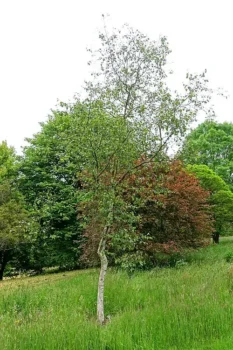
Szechuan White Birch: A Rare Find in American Gardens
If you’ve stumbled across the name Szechuan white birch (Betula szechuanica), you’re looking at one of the more obscure members of the birch family. This tree species represents an interesting case study in how some plants remain botanical mysteries, even in our information-rich world.
What Is Szechuan White Birch?
Szechuan white birch is a perennial tree species that, true to its name, likely originates from China’s Sichuan Province. Like other birches, it’s a deciduous tree that can grow to impressive heights—typically over 13 feet tall with a single trunk, though environmental conditions might encourage a more compact, multi-stemmed growth pattern.
You might also encounter this species under its botanical synonyms: Betula mandshurica var. szechuanica or Betula platyphylla var. szechuanica, which hints at its relationship to other Asian birch species.
Where Does It Grow?
Here’s where things get interesting (and a bit puzzling). While this tree is considered non-native to the United States and has been introduced to reproduce spontaneously in the wild, it’s currently only documented as growing in Massachusetts. This extremely limited distribution raises questions about its adaptability and presence in American landscapes.
- Species observed
- No observations
Should You Plant Szechuan White Birch?
Here’s the honest truth: there’s remarkably little information available about this specific birch species, which makes it difficult to recommend for home gardens. We don’t know its invasive potential, specific growing requirements, wildlife benefits, or even its basic care needs.
When faced with such uncertainty, especially with a non-native species, the wisest approach is to consider well-documented native alternatives that provide known benefits to local ecosystems.
Better Birch Alternatives
Instead of taking a chance on the mysterious Szechuan white birch, consider these native options:
- Paper birch (Betula papyrifera): Stunning white bark and excellent wildlife value
- River birch (Betula nigra): Tolerates wet soils and offers beautiful exfoliating bark
- Gray birch (Betula populifolia): Perfect for naturalized settings and pioneer plantings
The Mystery Factor
Sometimes in gardening, we encounter plants that remain enigmatic despite our best research efforts. Szechuan white birch appears to be one of these species—present in botanical records but lacking the detailed cultivation information that gardeners need to succeed.
If you’re drawn to unusual birch species, you’ll likely have better luck with more thoroughly documented varieties that offer known benefits to both gardeners and local wildlife. After all, the best garden choices are often the ones where success is predictable rather than mysterious.
Final Thoughts
While Szechuan white birch might sound intriguing, its limited documentation and unknown characteristics make it a questionable choice for most gardens. Stick with native birch species that offer proven beauty, known growing requirements, and documented wildlife benefits. Your garden—and local ecosystem—will thank you for choosing the known over the unknown.