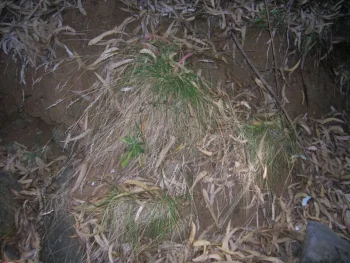
Tasmanian Wallaby Grass: A Low-Maintenance Groundcover for Dry Gardens
If you’re looking for a grass that won’t demand much fuss but can fill in those tricky dry spots in your landscape, Tasmanian wallaby grass (Rytidosperma semiannulare) might catch your interest. This unassuming perennial grass has quietly made itself at home in parts of California and Hawaii, offering gardeners a glimpse of Australian flora right in their backyard.
What Is Tasmanian Wallaby Grass?
Tasmanian wallaby grass is a small, tufted perennial grass that originally hails from Australia, particularly Tasmania and the southeastern mainland. You might also see it listed under its old scientific names, Arundo semiannularis or Danthonia semiannularis, in older gardening references.
This grass forms neat little clumps with fine-textured foliage and produces delicate seed heads that add subtle movement to the landscape. It’s not going to win any awards for showiness, but sometimes that’s exactly what you need – a reliable, quiet performer that does its job without drama.
Where Does It Grow?
In the United States, Tasmanian wallaby grass has established itself in California and Hawaii. It’s considered non-native to these areas but has naturalized, meaning it reproduces on its own and persists in the wild without human help.
- Species observed
- No observations
Should You Plant Tasmanian Wallaby Grass?
Here’s where it gets interesting. This grass can be a practical choice for certain situations, but it’s worth weighing the pros and cons:
The Good Stuff
- Extremely low maintenance once established
- Drought tolerant – perfect for water-wise gardening
- Thrives in poor soils where other plants struggle
- Forms attractive, tidy clumps
- Works well as groundcover in naturalized areas
Things to Consider
- It’s not native to North America
- Limited wildlife benefits compared to native grasses
- May self-seed and spread beyond where you plant it
- Won’t support local ecosystems like native alternatives would
Native Alternatives Worth Considering
Before you settle on Tasmanian wallaby grass, consider these native options that offer similar benefits but better support local wildlife:
- Buffalo grass (Poaceae family) for drought-tolerant lawns
- Blue grama grass for dry, naturalized areas
- Native bunch grasses specific to your region
Growing Tasmanian Wallaby Grass Successfully
If you decide this grass fits your needs, here’s how to help it thrive:
Ideal Growing Conditions
- Full sun to partial shade
- Well-draining soil (it actually prefers poor soils)
- USDA hardiness zones 8-10
- Low to moderate water needs once established
Planting and Care Tips
- Plant in fall for best establishment
- Water regularly the first season, then reduce once established
- No fertilizer needed – this grass thrives on neglect
- Cut back in late winter if desired, though it’s not necessary
- Monitor for self-seeding if you want to control spread
The Bottom Line
Tasmanian wallaby grass can be a practical choice for low-maintenance, drought-tolerant landscaping, especially in Mediterranean-style gardens or naturalized areas. While it won’t provide the ecological benefits of native plants, it’s not considered invasive and can serve a purpose in the right setting.
Just remember – every plant choice is an opportunity to support local wildlife and ecosystems. If you’re on the fence, exploring native grass alternatives might give you the best of both worlds: low maintenance and ecological benefits. Your local pollinators and wildlife will thank you for it!