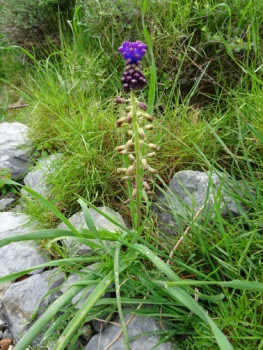
Tassel Grape Hyacinth: A Quirky Spring Bloomer for Your Garden
If you’re looking for a spring bulb that’s a little different from the usual suspects, meet the tassel grape hyacinth (Muscari comosum). This charming perennial bulb brings a unique two-toned flower display to gardens across much of the United States, though it’s not actually a native species.
What Makes Tassel Grape Hyacinth Special
The tassel grape hyacinth gets its name from its distinctive flower spikes that look like tiny tassels. Each bloom features two types of flowers: fertile brownish-purple flowers clustered at the base, topped with a showy crown of sterile bright blue-purple flowers that create the tassel effect. It’s this unusual combination that makes Muscari comosum stand out from its more common grape hyacinth cousins.
This perennial forb lacks woody stems and grows from underground bulbs, making it a perfect addition to spring garden displays. The flowers appear in late spring, typically reaching 12-18 inches tall.
Native Status and Distribution
Originally from the Mediterranean region, including southern Europe, North Africa, and western Asia, tassel grape hyacinth has made itself at home in many parts of North America. It’s considered a non-native species that has naturalized and now grows wild in twelve states: Georgia, Illinois, Kentucky, Missouri, North Carolina, Ohio, Oregon, Pennsylvania, South Carolina, Tennessee, Virginia, and Washington.
- Species observed
- No observations
Where and How to Grow Tassel Grape Hyacinth
One of the best things about tassel grape hyacinth is how easygoing it is. Hardy in USDA zones 4-9, this bulb adapts to a wide range of growing conditions:
- Thrives in well-drained soils
- Tolerates full sun to partial shade
- Handles poor soils without complaint
- Becomes drought-tolerant once established
Plant the bulbs in fall, about 3-4 inches deep and 3-4 inches apart. They’ll naturalize over time, often self-seeding to create larger colonies.
Garden Design Ideas
Tassel grape hyacinth works wonderfully in:
- Cottage gardens for a relaxed, informal look
- Rock gardens where its unique flowers can be appreciated up close
- Naturalized meadow plantings
- Mediterranean-style gardens
The unusual flower form makes it an excellent conversation starter and adds textural interest to spring bulb displays.
Pollinator and Wildlife Benefits
During its spring bloom period, tassel grape hyacinth attracts bees and other small pollinators. The flowers provide nectar and pollen when many native plants are still emerging from winter dormancy.
Care and Maintenance
This is definitely a plant it and forget it kind of bulb. Once established, tassel grape hyacinth requires minimal care. Allow the foliage to die back naturally after blooming to feed the bulb for next year’s display. The plants may self-seed, gradually expanding their territory.
Consider Native Alternatives
While tassel grape hyacinth isn’t considered invasive, gardeners interested in supporting local ecosystems might consider native spring bulbs instead. Look for native species like wild ginger, trout lily, or bloodroot that provide early season interest while supporting local wildlife.
The Bottom Line
Tassel grape hyacinth offers unique spring beauty with minimal effort required. Its distinctive flowers and easy-care nature make it appealing for gardeners who want something a little different in their spring display. Just remember that as a non-native species, it won’t provide the same ecological benefits as native plants, so consider balancing your garden with native alternatives when possible.