Teak Trees: The Majestic Giants You Might Want to Think Twice About
If you’ve ever admired the warm, golden glow of teak furniture, you’ve already been introduced to one of the world’s most prized timber trees. Teak (Tectona grandis) is a magnificent deciduous giant that’s captured the hearts of gardeners and woodworkers alike. But before you rush to plant one in your backyard, let’s dive into what makes this tree tick – and whether it’s the right choice for your landscape.
What Exactly Is Teak?
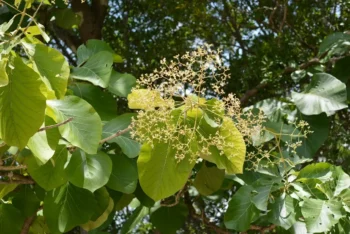
Teak is a perennial tree that can grow to impressive heights, typically reaching well over 13-16 feet tall with a single, sturdy trunk. This isn’t your average backyard tree – we’re talking about a true giant that demands respect and plenty of space. The tree produces broad, ovate leaves and delicate white flowers arranged in branching clusters called panicles.
Where Does Teak Come From (And Where Is It Now)?
Originally hailing from the tropical forests of south and southeast Asia – including India, Myanmar, Thailand, and Laos – teak has become something of a world traveler. In the United States, you’ll find established populations in Hawaii, Guam, Palau, Puerto Rico, and the U.S. Virgin Islands. However, it’s important to note that teak is considered a non-native species in all these locations, having been introduced by humans and now reproducing on its own in the wild.
- Species observed
- No observations
The Beauty and the Beast Dilemma
Let’s be honest – teak trees are absolutely stunning. Their large, tropical-looking leaves create excellent shade, and those small white flowers? They’re quite the pollinator magnet, attracting various insects during blooming season. The tree’s claim to fame, of course, is its gorgeous golden-brown heartwood that becomes more beautiful with age.
But here’s where things get complicated. While teak isn’t officially listed as invasive, its status as a non-native species that readily reproduces in the wild should give any environmentally conscious gardener pause.
Growing Conditions: Not for the Faint of Heart
If you’re still considering teak, you’ll need to check a few boxes first:
- Climate: USDA hardiness zones 10-12 only – this tree needs consistently warm, tropical to subtropical conditions
- Space: Lots and lots of it – teak trees are massive and need room to spread
- Sunlight: Full sun is non-negotiable
- Soil: Well-draining soils are essential; this tree has an Obligate Upland wetland status, meaning it almost never occurs in wetlands
- Water: Regular watering when young, though mature trees are relatively drought-tolerant
Planting and Care: The Long Game
Teak is definitely a plant it and forget it kind of tree – once established. Young trees need consistent watering and protection, but mature specimens require minimal intervention. Pruning is rarely necessary unless you’re dealing with damaged branches. Just remember: this is a decades-long commitment that will outlive you and probably your grandchildren.
The Verdict: Should You Plant Teak?
While teak trees are undeniably beautiful and not explicitly problematic, their non-native status means they’re not contributing to local ecosystems the way native species would. If you have the space and climate for a large shade tree, consider exploring native alternatives that will provide similar benefits while supporting local wildlife.
For those in suitable climates, native alternatives might include species like royal poinciana (in appropriate regions) or native fig species, depending on your specific location. These options will give you that tropical grandeur while playing nicely with local ecosystems.
If you do decide to plant teak, please do so responsibly – source your tree from reputable nurseries, ensure you have adequate space, and be mindful of your local environment. After all, gardening is about creating beauty, but it’s even better when that beauty works in harmony with nature.