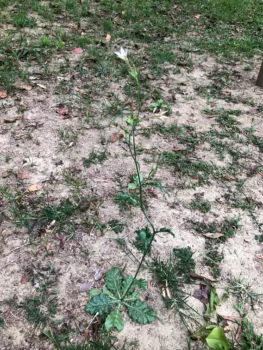
Tex-Mex Tobacco: A Humble Wildflower for Casual Gardens
If you’re looking for a low-maintenance annual that doesn’t mind poor soil and can fill in gaps in your garden, Tex-Mex tobacco (Nicotiana plumbaginifolia) might catch your interest. This unassuming member of the nightshade family has quietly established itself across parts of the southern United States, offering small white flowers and a relaxed, naturalized appearance.
What Is Tex-Mex Tobacco?
Tex-Mex tobacco is an annual forb, meaning it’s a non-woody herbaceous plant that completes its entire life cycle in one growing season. Despite its common name, this isn’t the tobacco you might be thinking of – it’s a much smaller, more delicate plant that typically reaches 1-3 feet in height. The plant produces clusters of small, tubular white flowers that bloom throughout the growing season.
Where Does It Grow?
Originally from South America, Tex-Mex tobacco has naturalized in several U.S. states, including Florida, Louisiana, Maryland, and Texas. It’s considered a non-native species that has established reproducing populations in the wild without human assistance.
- Species observed
- No observations
Garden Appeal and Uses
This plant won’t win any beauty contests, but it has its charms. Here’s what Tex-Mex tobacco brings to the table:
- Delicate white flowers that add subtle texture to garden beds
- Ability to thrive in poor soils where other plants struggle
- Self-seeding habit that can fill in bare spots naturally
- Low-maintenance growth requiring minimal care
- Attracts night-flying moths and some butterfly species
Growing Conditions
One of Tex-Mex tobacco’s strongest selling points is its adaptability. This plant is quite forgiving and can handle:
- Full sun to partial shade
- Poor, sandy, or disturbed soils
- Moderate drought once established
- USDA hardiness zones 3-11 (as an annual)
The plant has a facultative wetland status, meaning it can grow in both wet and dry conditions, making it quite versatile for different garden situations.
Planting and Care Tips
Growing Tex-Mex tobacco is refreshingly simple:
- Sow seeds directly in the garden in spring after the last frost
- Barely cover seeds as they need light to germinate
- Water lightly until established, then reduce frequency
- No fertilization needed – this plant actually prefers lean soil
- Allow some plants to go to seed for natural reseeding
- Deadhead spent flowers to encourage continued blooming if desired
Should You Plant It?
The decision to grow Tex-Mex tobacco depends on what you’re looking for in your garden. It’s perfect if you want:
- A low-maintenance gap filler
- Plants for disturbed or poor soil areas
- A naturalized, informal garden look
- Something that will self-seed for next year
However, since it’s not native to North America, you might want to consider native alternatives that provide similar benefits while supporting local ecosystems. Some excellent native options include wild bergamot, lanceleaf coreopsis, or native tobacco species like Nicotiana rustica, depending on your region.
The Bottom Line
Tex-Mex tobacco is an undemanding annual that can serve as a reliable filler plant in casual garden settings. While it may not be the showstopper of your garden, its adaptability and self-seeding habit make it useful for naturalizing disturbed areas or filling gaps where other plants struggle. Just remember to consider native alternatives that might provide similar benefits while better supporting your local wildlife and ecosystem.