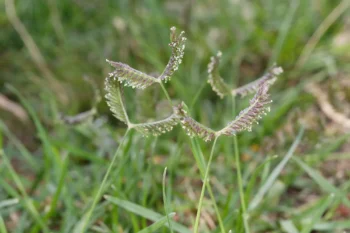
Threespike Goosegrass: An Uninvited Guest in American Gardens
Ever noticed a scrappy little grass popping up in sidewalk cracks, parking lots, or the forgotten corners of your garden? Meet threespike goosegrass (Eleusine tristachya), a determined annual grass that’s made itself quite at home across nine U.S. states, despite never receiving a formal invitation to the party.
What Exactly Is Threespike Goosegrass?
Threespike goosegrass is a small annual grass that belongs to the same family as more familiar grasses like Bermuda grass and crabgrass. Don’t let the goose in its name fool you – it’s not particularly appealing to our feathered friends. The plant gets its common name from its three-pronged seed heads that somewhat resemble a goose’s foot.
Botanically known as Eleusine tristachya (and sometimes by its synonym Cynosurus tristachyus), this grass is what gardeners politely call weedy and less politely call a persistent little nuisance.
Where You’ll Find This Grass
Originally hailing from tropical and subtropical regions of Africa and Asia, threespike goosegrass has established populations in Alabama, California, Missouri, Nevada, New Jersey, New York, Oregon, Texas, and Virginia. It’s particularly fond of disturbed soils, roadsides, and waste areas – basically anywhere the soil has been roughed up a bit.
- Species observed
- No observations
Should You Plant Threespike Goosegrass?
Here’s the short answer: probably not. While this grass isn’t officially listed as invasive, it’s what botanists call a naturalized species – meaning it reproduces on its own and persists without any help from humans. Think of it as that houseguest who keeps extending their stay without being asked.
Threespike goosegrass offers little in the way of ornamental value. It’s small, inconspicuous, and frankly not much to look at. If you’re seeking grasses for your landscape, you’d be much better served by native alternatives that provide similar texture without the potential for unwanted spreading.
Better Native Alternatives
Instead of threespike goosegrass, consider these native grass options that will give you similar benefits without the concerns:
- Buffalo grass (Poaceae family) – Perfect for low-maintenance lawns in drier regions
- Little bluestem – Offers beautiful fall color and supports native wildlife
- Sideoats grama – Attractive seed heads and excellent drought tolerance
- Blue grama – Creates a natural, prairie-like appearance
If It Shows Up Anyway
Since threespike goosegrass is an annual, it completes its entire life cycle in one growing season. If you find it in your garden, the good news is that it won’t persist year after year from the same root system. However, it can self-seed readily, so removing it before it sets seed is your best bet for keeping it under control.
The plant thrives in full sun and disturbed soils, so maintaining healthy, established plantings in your garden beds will help crowd it out naturally.
The Bottom Line
While threespike goosegrass isn’t going to take over your entire yard overnight, it’s not a plant most gardeners would choose intentionally. Its main talents are surviving in tough conditions and making more of itself – admirable traits in the wild, but not necessarily what you want in a garden setting.
Instead, focus your energy on native grasses that will support local wildlife, require less maintenance once established, and add genuine beauty to your landscape. Your local ecosystem (and your neighbors) will thank you for making the native choice.