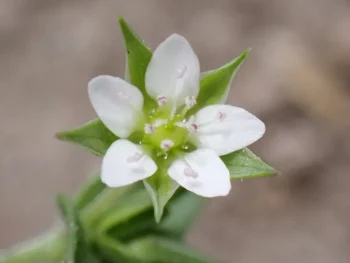
Thymeleaf Sandwort: A Delicate Ground Cover with European Charm
Meet thymeleaf sandwort (Arenaria serpyllifolia), a petite annual that’s been quietly making itself at home across North America for generations. This tiny European native might not win any garden beauty contests, but don’t let its modest appearance fool you – this little plant has some surprisingly useful qualities that might just earn it a spot in your landscape.
Getting to Know Thymeleaf Sandwort
Thymeleaf sandwort gets its common name from its small, oval leaves that bear a striking resemblance to thyme. This annual plant forms low-growing mats that rarely exceed a few inches in height, making it perfect for tucking into tight spaces. The tiny white flowers, measuring just 2-4 millimeters across, may be small but they’re charmingly delicate when viewed up close.
You might also encounter this plant under several botanical synonyms, including Arenaria leptoclados, but Arenaria serpyllifolia is the accepted scientific name.
Where You’ll Find It
Originally from Europe, western Asia, and North Africa, thymeleaf sandwort has become a non-native resident across most of North America. It’s established itself from coast to coast, thriving in Canadian provinces from British Columbia to Nova Scotia, and throughout the lower 48 states, even making its way to Hawaii.
- Species observed
- No observations
The Garden Verdict: To Plant or Not to Plant?
Here’s where things get interesting. While thymeleaf sandwort isn’t native to North America, it’s also not considered invasive or noxious in most areas. It’s more like that quiet neighbor who moved in decades ago and just blends into the community without causing any trouble.
This plant excels in situations where other ground covers might struggle:
- Between stepping stones and pavers
- In rock gardens and alpine settings
- As a filler in gravel gardens
- In poor, sandy soils where little else will grow
Growing Conditions and Care
One of thymeleaf sandwort’s best qualities is its easygoing nature. This tough little annual thrives in USDA hardiness zones 3-9 and has some refreshingly simple needs:
- Soil: Well-drained, sandy, or gravelly soils (actually prefers poor soil!)
- Sun exposure: Full sun to partial shade
- Water: Drought tolerant once established
- Wetland preference: Definitely an upland plant that prefers dry conditions
The plant’s wetland status varies by region, but consistently shows a preference for non-wetland areas, making it perfect for those challenging dry spots in your garden.
Planting and Maintenance Tips
Growing thymeleaf sandwort is refreshingly straightforward:
- Direct seed in fall or early spring when temperatures are cool
- Barely cover seeds as they need light to germinate
- Water gently until established, then let nature take over
- Expect the plant to self-seed readily for next year’s display
The best part? This plant practically takes care of itself once established. No fertilizing, minimal watering, and no fussing required.
Wildlife and Pollinator Benefits
While thymeleaf sandwort’s tiny flowers might seem insignificant, they actually provide nectar for small pollinators like tiny bees and flies. These diminutive visitors are often overlooked but play important roles in garden ecosystems.
Consider Native Alternatives
If you’re committed to native-only gardening, consider these North American alternatives that fill similar ecological niches:
- Wild strawberry (Fragaria virginiana) for ground cover
- Moss phlox (Phlox subulata) for rock gardens
- Various native sedums for dry, poor soils
The Bottom Line
Thymeleaf sandwort isn’t going to be the star of your garden, but it might just be the reliable supporting actor you didn’t know you needed. It’s perfect for gardeners who appreciate plants that know their place, don’t demand attention, and quietly do their job year after year. While it’s not native, it’s also not causing ecological havoc – think of it as a naturalized resident that’s earned its keep through decades of good behavior.
Whether you choose to welcome this European emigrant or stick with native alternatives, understanding the plants that inhabit our landscapes helps us make better gardening decisions. Sometimes the most interesting stories come from the smallest, most unassuming characters – and thymeleaf sandwort certainly fits that description.