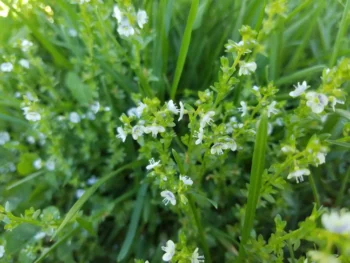
Thymeleaf Speedwell: A Tiny Ground Cover with Big Potential
Meet thymeleaf speedwell (Veronica serpyllifolia), a diminutive perennial that might just be the perfect solution for those tricky spots in your garden where nothing else seems to thrive. This little charmer may not be a native North American plant, but it’s certainly made itself at home across the continent, popping up in lawns, woodland edges, and moist meadows from coast to coast.
What Makes Thymeleaf Speedwell Special?
Don’t let its small stature fool you – this tiny forb packs plenty of charm into its petite package. Thymeleaf speedwell forms low, creeping mats of small, oval leaves that somewhat resemble thyme (hence the name). From spring through early summer, it produces delicate spikes of small white to pale blue flowers adorned with darker veins that create intricate patterns when viewed up close.
As a perennial herbaceous plant, thymeleaf speedwell lacks woody stems but returns year after year, slowly spreading to form attractive groundcover colonies. Its growth habit makes it an excellent choice for filling in gaps and creating natural-looking carpets in the garden.
Where Does It Grow?
Originally from Europe and Asia, thymeleaf speedwell has become widely distributed across North America. You can find it growing in Alaska, throughout Canada, across all the lower 48 states, and even in Hawaii. While it’s considered non-native in some regions like Greenland and Hawaii, its status varies across different areas of the continent.
- Species observed
- No observations
The plant shows remarkable adaptability to different moisture conditions. In Alaska and the Great Plains, it typically grows in consistently wet areas, while in other regions like the Western Mountains and Eastern regions, it’s more flexible about moisture levels and can handle both wet and dry conditions.
Garden Uses and Design Ideas
Thymeleaf speedwell shines in several garden situations:
- Rock gardens: Its low profile and delicate flowers complement alpine and rocky settings beautifully
- Woodland edges: Perfect for naturalizing in partially shaded areas where it can spread freely
- Ground cover: Excellent for covering bare soil in difficult spots where grass struggles
- Cottage gardens: Adds a wild, naturalized feel to informal garden designs
- Between stepping stones: Tolerates light foot traffic and creates a living pathway
Growing Conditions and Care
One of thymeleaf speedwell’s best qualities is its easy-going nature. This adaptable little plant thrives in USDA hardiness zones 3-8, making it suitable for most North American gardens.
Light requirements: Partial shade to full sun, though it appreciates some protection from intense afternoon sun in hotter climates.
Soil needs: Prefers moist, well-draining soil but adapts to various soil types. It’s particularly happy in consistently moist conditions but won’t tolerate waterlogged soil for extended periods.
Maintenance: This is truly a low-maintenance plant. Once established, it requires minimal care beyond occasional watering during dry spells. It spreads naturally through stolons (underground stems) and may also self-seed in favorable conditions.
Pollinator and Wildlife Benefits
While small, the flowers of thymeleaf speedwell provide nectar for tiny pollinators including small native bees, flies, and other beneficial insects. The dense mat-forming growth also creates microhabitat for small creatures and helps prevent soil erosion.
Things to Consider
Since thymeleaf speedwell isn’t native to North America, gardeners interested in supporting local ecosystems might prefer native alternatives such as:
- Wild strawberry (Fragaria virginiana)
- Wintergreen (Gaultheria procumbens)
- Wild ginger (Asarum canadense)
- Creeping phlox (Phlox subulata)
However, thymeleaf speedwell isn’t considered invasive or problematic, so there’s no harm in enjoying its quiet beauty if it already appears in your garden or if you’re drawn to its charming character.
The Bottom Line
Thymeleaf speedwell offers gardeners a reliable, low-maintenance ground cover option that adapts to various conditions and provides subtle beauty throughout the growing season. While it may not be native, it’s not aggressive or harmful, making it a reasonable choice for gardeners who appreciate its modest charm. Just remember to consider native alternatives that might provide even greater benefits to local wildlife and ecosystems.
Whether you’re looking to fill difficult spots in your garden or simply appreciate the quiet beauty of small wildflowers, thymeleaf speedwell might just earn a place in your gardening heart.