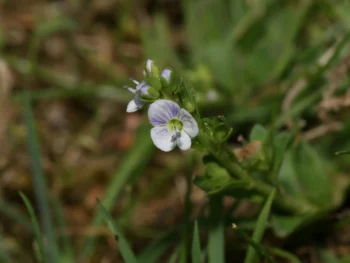
Thymeleaf Speedwell: A Charming Ground Cover for Your Garden
Looking for a delicate ground cover that won’t take over your entire garden? Meet thymeleaf speedwell (Veronica serpyllifolia serpyllifolia), a petite perennial that’s been quietly winning hearts across North America. This unassuming little plant might just be the perfect solution for those tricky spots where you need something pretty but not too pushy.
What Is Thymeleaf Speedwell?
Thymeleaf speedwell is a low-growing perennial forb that forms gentle mats of tiny, oval leaves. Despite its common name, it’s not related to thyme at all – the thymeleaf part simply refers to its small, thyme-like foliage. This European native has made itself quite at home across much of North America, from Alaska down to Alabama and from coast to coast.
As a non-native species, thymeleaf speedwell has successfully established itself throughout the United States, Canada, Alaska, Hawaii, and even Greenland. While it reproduces on its own in the wild, it’s generally well-behaved and doesn’t appear on invasive species lists.
- Species observed
- No observations
Why You Might Want to Grow Thymeleaf Speedwell
This little charmer has several things going for it:
- Delicate beauty: Produces tiny white to pale blue flowers with darker blue veining that add a subtle sparkle to the garden
- Low maintenance: Once established, it pretty much takes care of itself
- Versatile: Thrives in USDA hardiness zones 3-9, making it suitable for most temperate gardens
- Pollinator friendly: Attracts small bees, flies, and other tiny beneficial insects
- Adaptable: Tolerates various growing conditions and soil types
Garden Design and Landscape Uses
Thymeleaf speedwell works beautifully as a ground cover in informal garden settings. It’s particularly at home in:
- Rock gardens where it can weave between stones
- Naturalized areas where a wild, cottage garden look is desired
- Partially shaded spots under trees or shrubs
- Areas where you want gentle coverage without aggressive spreading
Growing Conditions and Care
One of the best things about thymeleaf speedwell is how easygoing it is. Here’s what it prefers:
- Light: Partial shade to full sun (though it appreciates some afternoon shade in hot climates)
- Soil: Moist, well-drained soil of various types
- Water: Consistent moisture without being soggy
- Maintenance: Minimal – just occasional weeding and maybe some spring cleanup
Planting and Propagation
Thymeleaf speedwell spreads naturally through runners and may also self-seed in favorable conditions. If you’re starting with plants, space them about 6-12 inches apart and they’ll gradually fill in the gaps. The best planting times are spring or early fall when temperatures are moderate and rainfall is typically more reliable.
A Word About Native Alternatives
While thymeleaf speedwell is a lovely and well-behaved garden plant, you might also consider some native alternatives that provide similar benefits. Wild ginger, creeping phlox, or native violets can offer comparable ground cover benefits while supporting local ecosystems. That said, if you already have thymeleaf speedwell or find it particularly appealing, it’s not a problematic choice for most gardens.
The Bottom Line
Thymeleaf speedwell is like that quiet friend who’s always there for you – reliable, undemanding, and surprisingly charming once you get to know them. It won’t steal the show in your garden, but it’ll provide steady, gentle beauty and attract beneficial insects while asking for very little in return. For gardeners looking for an easy-care ground cover with delicate appeal, this little speedwell might just speed its way into your heart.