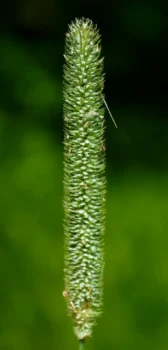
Timothy Grass: The Hardworking Hay Field Hero in Your Garden
If you’ve ever driven past a hay field and wondered about those distinctive, cylindrical seed heads swaying in the breeze, you’ve likely spotted timothy grass (Phleum pratense). This European native has become so common across North America that many gardeners assume it belongs here naturally. While timothy isn’t native to our continent, it’s been such a reliable performer in agriculture that it’s earned a permanent place in the landscape conversation.
What Exactly Is Timothy Grass?
Timothy is a perennial bunch grass that forms dense clumps rather than spreading aggressively. It’s part of the grass family (Poaceae) and grows in distinctive tufts that can reach up to 3 feet tall. The plant gets its name from Timothy Hanson, who promoted it as an excellent hay crop in the American colonies during the 1700s.
You might also encounter timothy under its botanical synonyms like Phleum nodosum, though Phleum pratense remains the accepted scientific name.
Where You’ll Find Timothy Growing
Originally from Europe and temperate Asia, timothy has naturalized across an impressive range in North America. You’ll find it growing in every U.S. state and Canadian province, from Alaska to Hawaii, and even in Greenland. It’s particularly common in cooler, moister regions where it thrives in meadows, fields, and roadsides.
- Species observed
- No observations
Interestingly, New Hampshire has classified timothy seed as a restricted noxious weed, so check your local regulations before planting.
Should You Plant Timothy in Your Garden?
Timothy occupies an interesting middle ground in the gardening world. It’s not flashy enough for most ornamental applications, but it’s incredibly practical for specific situations. Here’s when timothy might make sense for your landscape:
- Creating naturalized meadow areas
- Establishing low-maintenance ground cover in utility areas
- Providing forage if you keep livestock
- Erosion control on slopes (though native alternatives often work better)
However, since timothy isn’t native, consider these excellent native alternatives that provide similar benefits while supporting local ecosystems:
- Little bluestem (Schizachyrium scoparium)
- Canada wild rye (Elymus canadensis)
- Prairie dropseed (Sporobolus heterolepis)
Timothy’s Role in Wildlife and Ecosystems
While timothy does provide some wildlife value, it’s rather modest. Research shows that large animals, small mammals, and terrestrial birds use timothy for only 2-5% of their diet and rely on it sparsely for cover. This limited wildlife benefit is another reason to consider native grass alternatives that offer more substantial ecological support.
Timothy is wind-pollinated, so it doesn’t provide nectar or pollen resources for beneficial insects like native flowering plants do.
Growing Conditions and Care
If you decide timothy fits your landscape needs, you’ll find it remarkably easy to grow. This grass is quite accommodating:
Soil and Site Requirements
- Prefers fine to medium-textured soils
- Tolerates pH ranges from 5.0 to 7.8
- Needs at least 30 inches of annual precipitation
- Requires moderate fertility levels
Climate Preferences
- Hardy in USDA zones 3-9
- Tolerates temperatures as low as -43°F
- Needs at least 90 frost-free days
- Active growth occurs in spring and summer
Moisture and Light
- Has low drought tolerance, preferring consistent moisture
- Tolerates intermediate shade levels
- Typically grows in upland sites but can handle some wetland conditions
Planting and Establishment
Timothy is typically established from seed, which is readily available commercially. With over one million seeds per pound, a little goes a long way! The seeds germinate best in cool, moist conditions during late spring.
Here are some planting tips:
- Sow seeds in early spring or fall
- Plant at a shallow depth in well-prepared seedbed
- Keep soil consistently moist during germination
- Expect moderate seedling vigor and slow initial spread
Maintenance and Long-term Care
Once established, timothy is relatively low-maintenance. It has a rapid growth rate during its active season and moderate regrowth after cutting. The grass produces inconspicuous yellow flowers in late spring, followed by brown seeds through summer.
Timothy doesn’t resprout if damaged and has limited fire tolerance, so protect it from these stresses. It also has allelopathic properties, meaning it can inhibit the growth of some other plants nearby.
The Bottom Line on Timothy
Timothy grass is a dependable, if unremarkable, addition to landscapes where you need practical grass coverage rather than ornamental appeal. While it serves its purpose well, native grass alternatives often provide better wildlife habitat and ecosystem services. If you’re looking to create habitat for pollinators and native wildlife, those native options will serve you and your local ecosystem much better.
Whether you choose timothy or a native alternative, you’ll be adding valuable grass habitat to your landscape – and that’s always a step in the right direction for creating diverse, functional outdoor spaces.