Non-native Plants

Toothed Dock

Rumex dentatus

USDA symbol: RUDE3

annual forb

Canada: non-native, naturalized
Lower 48 states: non-native, naturalized

Meet toothed dock (Rumex dentatus), a plant that’s probably already growing somewhere near you – whether you invited it or not! This scrappy little character belongs to the buckwheat family and has made itself quite at home across North America, despite being a newcomer from Europe, Asia, and North Africa. ...

Toothed Dock: A Weedy Wildcard You Probably Don’t Want in Your Garden

Meet toothed dock (Rumex dentatus), a plant that’s probably already growing somewhere near you – whether you invited it or not! This scrappy little character belongs to the buckwheat family and has made itself quite at home across North America, despite being a newcomer from Europe, Asia, and North Africa.

What Exactly Is Toothed Dock?

Toothed dock is an annual or biennial forb – basically a non-woody plant that completes its life cycle in one to two years. True to its name, this plant sports narrow leaves with distinctive teeth along the edges, giving it a somewhat serrated appearance. Don’t expect any garden glamour here though – toothed dock is about as ornamental as a parking lot volunteer!

As a non-native species, toothed dock has established itself across several states including Alberta, Arizona, California, Ontario, Illinois, Missouri, Oregon, and Utah. It’s one of those plants that reproduces enthusiastically on its own and tends to stick around once it arrives.

  • Species observed
  • No observations

The Not-So-Pretty Truth About Appearance

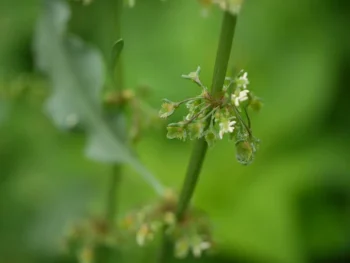
Let’s be honest – toothed dock won’t win any beauty contests. This plant produces small, inconspicuous flowers arranged on tall, spindly spikes that look more like something you’d pull from a crack in the sidewalk than showcase in your flower bed. The flowers are wind-pollinated, so they don’t need to be showy to attract pollinators, and it shows!

Where You’ll Find This Uninvited Guest

Toothed dock is remarkably adaptable when it comes to water conditions. Depending on your region, you might find it:

  • In wetland areas (particularly in the Arid West and Western Mountains regions)
  • In drier upland locations (more common in Eastern, Great Plains, Midwest, and Northcentral regions)
  • Pretty much anywhere it can establish itself

This flexibility makes it a successful colonizer of disturbed soils, waste places, and anywhere else conditions are less than ideal for more desirable plants.

Should You Plant Toothed Dock? (Spoiler Alert: Probably Not)

Here’s the thing about toothed dock – it’s not necessarily harmful, but it’s also not particularly beneficial. While it’s not officially listed as invasive, it’s definitely what most gardeners would call a weed. It offers minimal benefits to pollinators since it relies on wind for pollination rather than attracting beneficial insects.

The plant is quite hardy and can grow in USDA zones 3-9, tolerating poor soils and drought conditions with ease. But just because it can grow almost anywhere doesn’t mean you want it to!

Better Native Alternatives

Instead of letting toothed dock take over, consider these native alternatives that offer similar hardiness but actual benefits to your local ecosystem:

  • Native dock species like curly dock (where appropriate)
  • Wild bergamot for pollinator support
  • Native grasses that provide better soil stabilization
  • Regional wildflower mixes suited to your specific area

If It’s Already There…

Found toothed dock growing uninvited in your space? You’re not alone! Since it’s an annual or biennial, preventing it from going to seed is key to controlling its spread. Remove plants before they flower, and consider replacing them with native alternatives that will provide better ecological benefits and visual appeal.

While toothed dock isn’t necessarily a villain in the plant world, it’s definitely not the hero of your garden story. Save your space for native plants that will support local wildlife and bring genuine beauty to your landscape!

Rumex dentatus is also known as...

Often we refer to plants by their common names. When shopping for plants the scientific name is the best way to positively identify the plant species you desire. But some plants have more than one name! While it doesn't happen often, nurseries might display one name while you're searching for another. Rumex dentatus is also known as:

Rumex dentatus ssp. klotzschianus f. | USDA symbol: RUDEK

Why do some plants have more than one name? Over time plant species may be renamed for a few reasons:

  1. Botanists in different regions named the same plant without knowing it had already been classified.
  2. A species was reclassified after scientific advances in, for example, DNA analysis.
  3. Slight variations within a species are sometimes mistakenly identified as entirely new species.

Wetland Status

The rule of seasoned gardeners and landscapers is to choose the "right plant for the right place" — matching plants to their ideal growing conditions, so they'll thrive with less care and fewer inputs. But the simplicity of this catchphrase conceals how tricky plant selection can be if you don't have the right information. While tags on nursery plants list watering requirements, there's more to the story.

Knowing a plant's wetland status can simplify the process by revealing the interaction between plants, water, and soil. You might be surprised to learn that popular landscape plants are wetland species! And what may be a wetland plant in one area, in another it might thrive in drier conditions. The table below gives insight into the preferred growing conditions of this plant throughout its geographical distribution.

Region
Preferred Habitat

Arid West (AZ, CA, CO, ID, MT, NV, NM, OR, TX, UT, WA, WY)

Facultative Wetland

Eastern Mountains and Piedmont (AL, AR, DC, DE, GA, IL, IN, KS, KY, MD, MO, NC, NJ, NY, OH, OK, PA, SC, TN, VA, WV)

Facultative Upland

Great Plains (CO, KS, MN, MT, NE, NM, ND, OK, SD, TX, WY)

Facultative Upland

Midwest (IL, IN, IA, KS, KY, MI, MN, MO, NE, ND, OK, OH, SD, WI)

Facultative Upland

Northcentral & Northeast ()

Facultative Upland

Western Mountains, Valleys, and Coast (AZ, CA, CO, ID, MT, NV, NM, OR, SD, UT, WA, WY)

Facultative Wetland
Wetland Glossary
Obligate Wetland
Facultative Wetland
Facultative
Facultative Upland
Obligate Upland
Almost always occurs in wetlands
Usually occurs in wetlands but may occur in non-wetlands
Can occur in wetlands and non-wetlands
Usually occurs in non-wetlands but may occur in wetlands
Almost never occurs in wetlands

Classification

Group: Dicot
Kingdom: Plantae - Plants
Subkingdom: Tracheobionta - Vascular plants
Superdivision: Spermatophyta - Seed plants
Division: Magnoliophyta - Flowering plants
Class: Magnoliopsida - Dicotyledons
Subclass: Caryophyllidae
Order: Polygonales
Family: Polygonaceae Juss. - Buckwheat family
Genus: Rumex L. - dock

Species: Rumex dentatus L. - toothed dock

Plant data source: USDA, NRCS 2025. The PLANTS Database. https://plants.usda.gov,. 2/25/2025. National Plant Data Team, Greensboro, NC USA