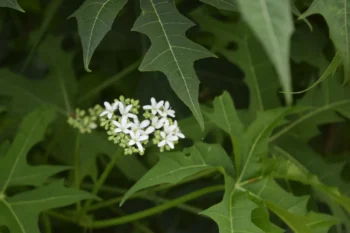
Treadsoftly (Cnidoscolus aconitifolius): A Tropical Edible with Bite
Meet treadsoftly, a plant that lives up to its cautionary common name! This striking tropical shrub might catch your eye with its bold, deeply-lobed leaves and clusters of white flowers, but approach with respect – those leaves pack a stinging punch that’ll remind you why it earned its tread softly reputation.
What Exactly Is Treadsoftly?
Treadsoftly (Cnidoscolus aconitifolius) is a perennial shrub that typically grows as a multi-stemmed woody plant reaching 13 to 16 feet in height, though it can sometimes grow taller or develop a single stem depending on growing conditions. Originally native to Mexico and Central America, this plant has made itself at home in Puerto Rico, where it now reproduces and persists in the wild without human assistance.
You might also see this plant listed under its former scientific name, Jatropha aconitifolia, or hear it called chaya or Mayan spinach in culinary circles.
Where Does It Grow?
In the United States, treadsoftly has established itself in Puerto Rico. Its native range spans Mexico and Central America, where it’s been cultivated for centuries as both an ornamental and food plant.
- Species observed
- No observations
Should You Plant Treadsoftly in Your Garden?
The decision to grow treadsoftly comes with both exciting possibilities and important considerations. Here’s what you need to know:
The Good News
- Striking appearance: Those large, deeply-cut palmate leaves create an impressive tropical look
- Edible potential: When properly cooked, the leaves are nutritious and edible (but never eat them raw!)
- Pollinator friendly: The white flowers attract bees and other beneficial insects
- Low maintenance: Once established, it’s quite drought tolerant and easy to care for
The Cautions
- Stinging hairs: The leaves have irritating hairs that can cause skin irritation – always wear gloves when handling
- Toxic when raw: The leaves contain compounds that are harmful if eaten uncooked
- Not native: While not listed as invasive, it’s worth considering native alternatives that support local ecosystems
Growing Treadsoftly Successfully
If you decide to grow treadsoftly, you’ll find it’s relatively accommodating once you understand its needs.
Climate Requirements
Treadsoftly thrives in USDA hardiness zones 9-11, making it suitable for tropical and subtropical climates. It won’t tolerate frost, so northern gardeners would need to treat it as a container plant that moves indoors for winter.
Ideal Growing Conditions
- Light: Full sun to partial shade (6+ hours of direct sunlight is ideal)
- Soil: Well-draining soil is essential – it won’t tolerate waterlogged conditions
- Water: Drought tolerant once established, but benefits from regular watering during dry spells
- Space: Allow room for its potential 13-16 foot height and spreading habit
Planting and Care Tips
- Always wear protective clothing and gloves when handling the plant
- Plant in spring after the last frost danger has passed
- Water regularly during the first growing season to help establish roots
- Prune as needed to maintain desired size and shape
- Fertilize lightly in spring with a balanced fertilizer
- Watch for the white flower clusters that appear and attract pollinators
Garden Design Ideas
Treadsoftly works well as:
- A specimen plant in tropical landscape designs
- Part of an edible garden (with proper precautions for handling and preparation)
- A backdrop plant in mixed borders
- Container growing in colder climates
Consider Native Alternatives
While treadsoftly isn’t considered invasive, supporting native plant communities benefits local wildlife and ecosystems. Consider researching native shrubs in your area that offer similar aesthetic appeal or edible qualities. Your local native plant society or extension office can suggest alternatives that naturally belong in your region’s ecosystem.
The Bottom Line
Treadsoftly can be a fascinating addition to the right garden – one where the gardener respects its stinging nature and appreciates its unique combination of ornamental and edible qualities. Just remember to handle with care, cook those leaves thoroughly if you plan to eat them, and always prioritize safety around this beautiful but demanding plant.
Whether you choose to grow treadsoftly or opt for native alternatives, the key is making informed decisions that work for your garden, your climate, and your local ecosystem.