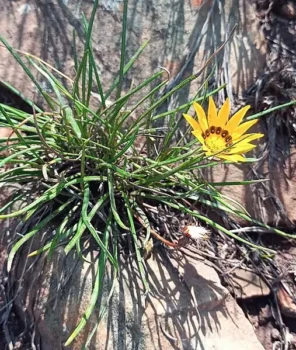
Treasureflower (Gazania linearis): A Lesser-Known Garden Perennial
If you’ve been searching for something a little different to add to your garden palette, you might have stumbled across Gazania linearis, commonly known as treasureflower. This perennial forb brings a touch of South African flair to American gardens, though it’s definitely flying under the radar compared to its more famous cousin, Gazania rigens.
What Exactly Is Treasureflower?
Treasureflower is a non-woody perennial that falls into the forb category—think of it as an herbaceous plant that comes back year after year but doesn’t develop thick, woody stems like a shrub would. Originally from South Africa, this plant has found its way into cultivation and has established itself in parts of California, where it reproduces on its own in the wild.
You might also see it listed under its former scientific names, including Gazania longiscapa or Gorteria linearis, if you’re browsing older gardening references or plant databases.
Where Does It Grow?
In the United States, treasureflower has naturalized in California, where the Mediterranean-like climate suits its preferences. It’s one of those plants that has adapted well to the Golden State’s dry summers and mild winters.
- Species observed
- No observations
Should You Plant Treasureflower?
Here’s where things get a bit tricky. While Gazania linearis isn’t currently listed as invasive or noxious, there’s limited specific information available about this particular species’ garden performance and potential impacts. This makes it something of a wildcard in the gardening world.
The Case for Growing It
- It’s a perennial, so you’ll get years of growth from a single planting
- As part of the Gazania family, it likely produces cheerful, daisy-like flowers
- It’s probably quite drought-tolerant once established
- Could work well in water-wise landscaping
The Case for Caution
- Limited information exists about its specific growing requirements and behavior
- As a non-native plant, it won’t provide the same ecological benefits as native species
- Its naturalization in California suggests it can spread on its own
- Better-documented alternatives are readily available
Native Alternatives to Consider
If you’re drawn to the idea of treasureflower but want to support local ecosystems, consider these native options that offer similar benefits:
- California poppies (Eschscholzia californica) for bright, cheerful blooms
- Blanket flower (Gaillardia species) for daisy-like flowers and drought tolerance
- Desert marigold (Baileya multiradiata) for long-lasting yellow blooms
Growing Tips (If You Choose to Plant It)
While specific care information for Gazania linearis is scarce, most Gazania species share similar preferences:
- Plant in full sun for best flowering
- Ensure excellent drainage—these plants hate wet feet
- Water sparingly once established
- Expect it to handle heat and drought well
- Deadhead spent flowers to encourage continued blooming
The Bottom Line
Treasureflower remains something of a mystery plant in the gardening world. While it’s not flagged as problematic, the lack of detailed information makes it hard to recommend wholeheartedly. If you’re curious about trying it, consider starting small and monitoring its behavior in your garden. However, you might find greater success and ecological benefit by choosing well-documented native alternatives that provide similar aesthetic appeal with clearer growing guidelines and proven wildlife benefits.
Whatever you decide, remember that every garden is an opportunity to support local ecosystems while creating beautiful spaces—and sometimes that means passing on the exotic unknowns in favor of tried-and-true natives that both you and local wildlife will love.