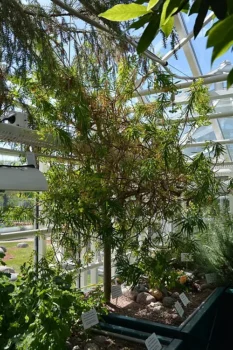
Tree Spurge: A Mediterranean Architectural Wonder for Drought-Tolerant Gardens
If you’re looking for a plant that screams sculptural drama while laughing in the face of drought, tree spurge might just catch your eye. This distinctive succulent shrub brings a touch of Mediterranean flair to gardens, though it’s worth understanding what you’re getting into before you plant.
What Is Tree Spurge?
Tree spurge (Euphorbia dendroides) is a perennial shrub that’s basically the architectural equivalent of a living sculpture. This multi-stemmed woody plant typically grows to about 13-16 feet tall, creating thick, fleshy branches that look like they belong in a modern art installation. During flowering season, it produces clusters of small yellowish-green flowers that add subtle color to its dramatic form.
Where Does It Come From?
Originally from the Mediterranean region, tree spurge has found its way to California, where it grows and reproduces on its own in the wild. It’s what botanists call a naturalized species – not native to North America, but established enough to persist without human help.
- Species observed
- No observations
The Good, The Bad, and The Spiky
Why you might love it:
- Incredibly drought tolerant once established
- Provides year-round structural interest
- Perfect for Mediterranean and modern landscape designs
- Requires minimal maintenance
- Thrives in poor, rocky soils where other plants struggle
Why you might want to think twice:
- Contains toxic, milky sap that can cause skin and eye irritation
- Not native to North America
- Frost-sensitive and limited to warmer climates
- Provides limited benefits to local wildlife
Growing Conditions and Care
Tree spurge is surprisingly easy to please, as long as you give it what it craves: sunshine and good drainage.
Climate needs: Hardy in USDA zones 9-11, this plant definitely prefers life on the warmer side. If you live somewhere that gets regular frost, this isn’t the plant for you.
Soil and water: Plant it in well-draining, sandy, or rocky soil – the kind of spot where water doesn’t hang around after a rain. Once established, it’s incredibly drought tolerant and actually prefers to stay on the dry side.
Light requirements: Full sun is best. This Mediterranean native wants to bask in bright light all day long.
Planting and Care Tips
Here’s how to keep your tree spurge happy:
- Safety first: Always wear gloves when handling tree spurge. The milky sap can cause skin irritation and is toxic if ingested
- Planting: Choose a sunny spot with excellent drainage. Dig a hole just as deep as the root ball and twice as wide
- Watering: Water regularly the first year to help establish roots, then back off significantly. Overwatering is more dangerous than underwatering
- Pruning: Minimal pruning needed, but if you must trim, do it in late winter and always wear protective gear
- Winter protection: In zone 9, consider protecting from frost with covers during cold snaps
Garden Design Ideas
Tree spurge works beautifully as:
- A focal point in Mediterranean-style gardens
- Architectural accent in modern landscapes
- Backdrop plant in rock gardens
- Statement piece in drought-tolerant designs
Consider Native Alternatives
While tree spurge can be a striking addition to the right garden, consider these native alternatives that provide similar architectural interest while supporting local ecosystems:
- Desert Willow (Chilopsis linearis): Sculptural form with beautiful flowers
- Palo Verde (Parkinsonia florida): Architectural branching and yellow blooms
- Ocotillo (Fouquieria splendens): Dramatic, sculptural appearance
The Bottom Line
Tree spurge can be a stunning addition to the right garden – one with plenty of sun, excellent drainage, and a Mediterranean or modern aesthetic. Just remember to handle with care (literally!), and consider whether a native alternative might better serve both your garden goals and local wildlife. If you do decide to grow tree spurge, you’ll have a low-maintenance, drought-tolerant conversation starter that’s sure to turn heads.