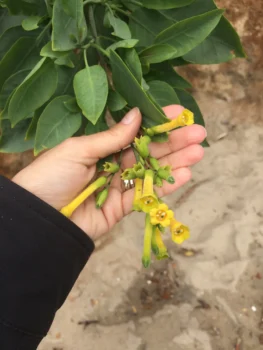
Tree Tobacco: A Drought-Tolerant Shrub with Year-Round Appeal
If you’re looking for a fast-growing, low-maintenance shrub that can handle tough conditions, tree tobacco (Nicotiana glauca) might catch your attention. This perennial shrub brings unique blue-green foliage and cheerful yellow-green tubular flowers to landscapes, especially in areas where water conservation is a priority.
What is Tree Tobacco?
Tree tobacco is a multi-stemmed woody shrub that typically grows 13-16 feet tall, though it can reach greater heights under ideal conditions. Despite its common name, this plant isn’t actually related to commercial tobacco in terms of garden use – it’s named for its botanical family relationship. The shrub produces distinctive tubular flowers that can bloom throughout much of the year in mild climates, creating an almost continuous display of color.
Native Status and Where It Grows
Originally from South America, tree tobacco is a non-native species that has established itself across many parts of the United States. You’ll find it growing in Alabama, Arizona, California, Florida, Georgia, Hawaii, Maryland, Nevada, New Jersey, New Mexico, Ohio, Texas, and several U.S. territories. The plant has proven quite adaptable, reproducing naturally in the wild across these diverse climates.
- Species observed
- No observations
Garden Appeal and Landscape Role
Tree tobacco offers several attractive features for gardeners:
- Distinctive blue-green, waxy leaves that provide year-round interest
- Bright yellow-green tubular flowers that attract hummingbirds
- Fast growth rate for quick screening or filling empty spaces
- Impressive drought tolerance once established
In landscape design, this shrub works well as a specimen plant, informal hedge, or background planting in xeriscaping and Mediterranean-style gardens. Its ability to thrive with minimal water makes it particularly valuable in low-water landscapes.
Growing Conditions and Care
Tree tobacco is remarkably easy to grow and quite forgiving. Here’s what it needs to thrive:
- Sunlight: Full sun exposure for best growth and flowering
- Soil: Well-draining soil; adapts to various soil types
- Water: Drought tolerant once established; minimal watering needed
- Climate: Hardy in USDA zones 8-11
Planting and Care Tips
Getting started with tree tobacco is straightforward. Plant in spring after the last frost, choosing a sunny location with good drainage. Water regularly during the first growing season to help establish roots, then reduce watering significantly. The plant requires very little maintenance once established – occasional pruning to maintain shape is typically all that’s needed.
One important note: tree tobacco can self-seed readily, so you may find volunteer plants appearing in your garden. Keep this in mind when deciding on placement.
Wetland Tolerance
Tree tobacco shows interesting adaptability to moisture conditions. In most regions, it’s classified as facultative, meaning it can grow in both wetland and non-wetland conditions. However, in Hawaii, it’s considered an obligate upland plant, preferring drier conditions.
Wildlife and Pollinator Benefits
The tubular flowers of tree tobacco are particularly appealing to hummingbirds, making it a good choice for wildlife gardens focused on attracting these energetic visitors. Some butterflies may also visit the blooms, though it’s not a primary butterfly plant.
Consider Native Alternatives
While tree tobacco can be an attractive and useful garden plant, consider exploring native alternatives that provide similar benefits while supporting local ecosystems. Native plants adapted to your specific region often require even less maintenance and provide superior wildlife habitat. Consult with local native plant societies or extension services to discover indigenous shrubs that offer comparable drought tolerance and visual appeal for your area.
Tree tobacco can certainly fill a niche in water-wise gardening, but weighing it against native options ensures you’re making the best choice for both your landscape goals and local environmental health.