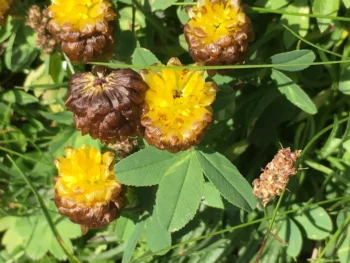
Trifolium badium: When Plant Names Lead to Dead Ends
Ever stumbled across a plant name that seems to vanish into thin air when you try to learn more about it? That’s exactly what happens with Trifolium badium – a name that appears to exist in some plant databases but lacks the botanical backing you’d expect from a legitimate species.
The Mystery of the Missing Clover
While Trifolium is definitely a real genus – it’s home to all our beloved clovers – the species name badium doesn’t appear in any major botanical references or plant databases. This leaves us in an interesting predicament: we have a name without a plant to match it.
What This Means for Gardeners
If you’ve come across Trifolium badium in your plant research, here’s what you should know:
- The name lacks verification in standard botanical sources
- No growing information, native range, or characteristics are documented
- It may be a misidentification, outdated name, or database error
Finding Your Perfect Clover Alternative
Rather than chasing an elusive plant name, consider these well-documented and readily available native clover options:
- White Clover (Trifolium repens) – A low-growing perennial perfect for naturalized areas
- Red Clover (Trifolium pratense) – Taller with gorgeous pink-purple flowers
- Crimson Clover (Trifolium incarnatum) – Annual with striking bright red blooms
How to Verify Plant Names
When you encounter unfamiliar plant names, here’s how to double-check their legitimacy:
- Cross-reference multiple reputable botanical databases
- Check with your local extension office or botanical garden
- Look for the plant in peer-reviewed botanical literature
- Verify with native plant societies in your region
The Takeaway
While Trifolium badium remains a botanical mystery, don’t let that discourage your native gardening journey. The world of legitimate clover species offers plenty of wonderful options for supporting pollinators, fixing nitrogen in your soil, and adding charming blooms to your landscape. Sometimes the best discoveries come from exploring the alternatives!
Remember: when in doubt about plant identification, it’s always better to choose well-documented native species that you can grow with confidence and success.