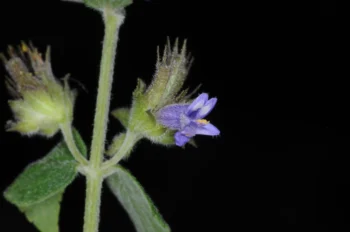
Tropical Bushmint: A Pretty but Problematic Non-Native Plant
If you’ve been wandering through the southeastern United States and stumbled upon a minty-scented plant with delicate spikes of small flowers, you might have encountered tropical bushmint (Hyptis mutabilis). While this perennial herb has its charms, there’s more to this story than meets the eye – and nose!
What is Tropical Bushmint?
Tropical bushmint is a non-native perennial forb that has made itself quite at home in the southeastern United States. As a member of the mint family, it shares that characteristic aromatic quality that makes you want to crush a leaf between your fingers. This herbaceous plant lacks significant woody growth, instead producing soft stems and leaves that die back seasonally while the root system persists year after year.
You might also see this plant listed under its scientific synonyms Cantinoa mutabilis or Hyptis mutabilis var. spicata in older botanical references.
Where You’ll Find It
Originally from tropical regions of the Americas, tropical bushmint has established populations across seven southeastern states: Alabama, Florida, Georgia, Louisiana, Mississippi, South Carolina, and Virginia. The plant has proven quite adaptable, reproducing spontaneously in the wild without any human assistance.
- Species observed
- No observations
The Invasion Concern
Here’s where things get a bit complicated. While tropical bushmint might seem like a harmless addition to your garden, it’s currently on Alabama’s invasive species Watch List. This designation means that while it’s not yet causing widespread ecological damage, it has the potential to become problematic if it continues to spread unchecked.
The plant’s ability to thrive in both wetland and non-wetland environments (what botanists call facultative status) makes it particularly adaptable and potentially competitive with native species.
Garden Considerations
If you’re thinking about adding tropical bushmint to your landscape, here are some things to consider:
The Appeal
- Produces small, attractive white to pale purple flowers arranged in spikes
- Aromatic foliage adds sensory interest to garden spaces
- Attracts pollinators like small bees and butterflies
- Low maintenance once established
- Tolerates a wide range of growing conditions
Growing Conditions
Tropical bushmint is remarkably adaptable, which is part of what makes it a concern as a potential invasive species. It thrives in USDA hardiness zones 8-11 and can handle:
- Full sun to partial shade
- Moist to wet soils (though it’s adaptable to drier conditions too)
- Various soil types
- Both wetland and upland environments
Our Recommendation: Consider Native Alternatives
Given tropical bushmint’s status on Alabama’s Watch List and its non-native origins, we’d recommend exploring native alternatives that can provide similar benefits without the ecological concerns. Consider these southeastern native plants instead:
- Wild bergamot (Monarda fistulosa) – another aromatic mint family member with showy flowers
- American beautyberry (Callicarpa americana) – attracts pollinators and birds
- Coral honeysuckle (Lonicera sempervirens) – native vine with tubular flowers
- Spicebush (Lindera benzoin) – aromatic native shrub
If You Already Have It
If tropical bushmint has already established itself in your garden, monitor it carefully to prevent it from spreading to natural areas. Consider gradually replacing it with native alternatives, and never dump garden waste containing this plant in natural areas where it could establish new populations.
The Bottom Line
While tropical bushmint has its attractive qualities – that pleasant minty scent, delicate flowers, and pollinator appeal – its potential as an invasive species makes it a less-than-ideal choice for responsible gardeners. By choosing native alternatives, you can enjoy similar benefits while supporting local ecosystems and avoiding the risk of contributing to invasive species problems.
Remember, the best gardens work with nature, not against it. When we choose plants that belong in our local ecosystems, we create landscapes that are not only beautiful but also beneficial to the wildlife that calls our regions home.