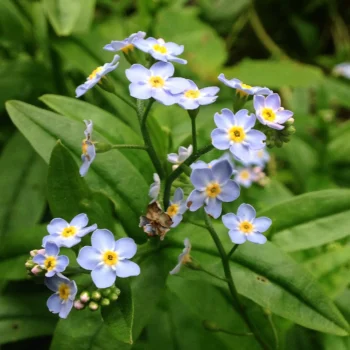
True Forget-Me-Not: A Beautiful but Problematic Non-Native Plant
With its charming clusters of tiny blue flowers and romantic name, the true forget-me-not (Myosotis scorpioides) might seem like the perfect addition to your garden. However, this European native comes with some serious baggage that every responsible gardener should know about before considering it for their landscape.
What is True Forget-Me-Not?
True forget-me-not is a low-growing perennial forb that typically reaches about 1.5 feet in height. Also known by its synonym Myosotis palustris, this rhizomatous plant produces delicate blue flowers with bright yellow centers from mid-spring through summer. The soft, hairy foliage creates dense mats during the growing season, becoming more porous in winter when the plant loses its leaves.
Native Status and Distribution Concerns
Here’s where things get complicated: true forget-me-not is not native to North America. Originally from Europe and Asia, this plant has established itself across virtually the entire continent, from Alaska to Alabama, and from coast to coast. It reproduces spontaneously in the wild without human assistance and tends to persist wherever it lands.
- Species observed
- No observations
Why You Should Think Twice About Planting It
Before you fall for those pretty blue blooms, consider these important facts:
- Invasive Status: Connecticut has classified true forget-me-not as Invasive, Prohibited, meaning it’s banned from sale and planting
- Restricted Species: Wisconsin lists it as Restricted, limiting its use
- Aggressive Spreader: The plant spreads both by underground rhizomes and prolific self-seeding, with seeds spreading rapidly
- Wetland Domination: It’s classified as an obligate wetland plant in most regions, meaning it can take over sensitive wetland habitats
Growing Conditions (If You Encounter It)
Understanding how true forget-me-not thrives can help you identify and manage existing populations:
- Moisture: Requires high moisture use and thrives in consistently wet conditions
- Soil: Prefers fine to medium-textured soils with high anaerobic tolerance
- pH: Grows in slightly acidic to neutral soils (5.5-7.5)
- Hardiness: Cold-hardy to -33°F, suitable for USDA zones 3-9
- Light: Tolerates intermediate shade conditions
Better Native Alternatives
Instead of risking ecological damage with true forget-me-not, consider these beautiful native alternatives that provide similar aesthetic appeal:
- Wild Blue Phlox (Phlox divaricata): Offers lovely blue flowers and attracts pollinators
- Blue-eyed Grass (Sisyrinchium species): Provides small blue flowers and grass-like foliage
- Great Blue Lobelia (Lobelia siphilitica): Spectacular blue spikes perfect for wet areas
- Wild Bergamot (Monarda fistulosa): Purple-blue flowers beloved by pollinators
Wildlife and Pollinator Considerations
While true forget-me-not does attract some pollinators with its nectar-rich flowers, native plants almost always provide superior benefits to local wildlife. Native species have co-evolved with local insects, birds, and other wildlife, offering specialized relationships that non-native plants simply cannot replicate.
The Bottom Line
As tempting as those sweet blue flowers might be, true forget-me-not is a plant that’s better left to memory than to your garden. Its invasive tendencies and ability to dominate wetland areas make it a poor choice for responsible gardeners. Instead, embrace the beauty of native alternatives that will provide equal charm while supporting your local ecosystem.
Remember: the most beautiful gardens are those that work in harmony with nature, not against it. Choose plants that will make your landscape truly unforgettable – for all the right reasons.