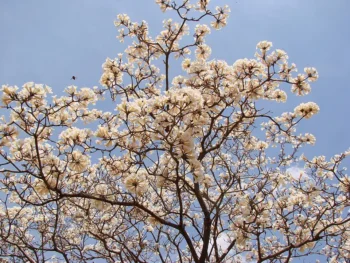
Trumpet-Tree (Tabebuia): A Spectacular Non-Native Bloomer for Warm Climate Gardens
If you’ve ever been dazzled by a tree completely covered in brilliant trumpet-shaped flowers, you’ve likely encountered a Tabebuia, commonly known as trumpet-tree. These stunning perennial shrubs and trees have captured the hearts of gardeners in warm climates with their show-stopping seasonal displays that can turn an entire landscape into a living canvas of color.
What Makes Trumpet-Trees Special?
Trumpet-trees are woody perennial plants that typically grow as multi-stemmed shrubs, usually reaching heights of 13-16 feet, though they can grow taller under ideal conditions. What sets them apart from other flowering trees is their incredible floral display – when in bloom, these plants often shed their leaves and become completely covered in clusters of trumpet-shaped flowers in vibrant yellows, pinks, purples, or whites.
Native Status and Geographic Distribution
It’s important to know that trumpet-trees are not native to most of the United States. Originally from tropical and subtropical regions of Central and South America, these trees have been introduced to various locations. In the U.S., you’ll find them growing in Florida, Puerto Rico, and the Virgin Islands, as well as in Palau in the Pacific Basin.
- Species observed
- No observations
While they’re non-native to most U.S. regions, trumpet-trees aren’t currently classified as invasive, which means they can be grown responsibly in appropriate climates. However, consider exploring native alternatives that provide similar aesthetic appeal while supporting local ecosystems.
Why Gardeners Love (and Sometimes Avoid) Trumpet-Trees
Reasons to plant trumpet-trees:
- Spectacular seasonal flower displays that create stunning focal points
- Attract pollinators including bees, butterflies, and hummingbirds
- Relatively low maintenance once established
- Drought tolerant after the establishment period
- Excellent for tropical and subtropical landscape designs
Potential drawbacks:
- Only suitable for warm climates (USDA zones 9b-11)
- Can be messy when flowers and leaves drop
- Non-native status means they don’t support native wildlife as effectively as indigenous plants
- May require protection from frost in marginal growing zones
Growing Conditions and Care
Trumpet-trees thrive in warm, sunny locations and aren’t particularly fussy about soil types as long as drainage is good. Here’s what they need to flourish:
Sunlight: Full sun exposure produces the best flowering displays
Soil: Well-draining soil is essential; they tolerate various soil types but struggle in waterlogged conditions
Climate: Best suited for USDA hardiness zones 9b through 11
Water: Regular watering during establishment, then drought tolerant
Planting and Care Tips
For the best success with your trumpet-tree, follow these guidelines:
- Timing: Plant in spring after the last frost danger has passed
- Spacing: Give them plenty of room to spread – these shrubs can get quite wide
- Watering: Water regularly for the first year, then reduce frequency as the plant establishes
- Pruning: Prune lightly after flowering to maintain shape, but avoid heavy pruning which can reduce next year’s blooms
- Frost protection: In marginal zones, be prepared to protect young plants from unexpected cold snaps
Landscape Design Ideas
Trumpet-trees work wonderfully as:
- Specimen plants in tropical garden designs
- Focal points in large landscape beds
- Street trees in appropriate climates
- Background plantings that provide seasonal color
Supporting Pollinators Responsibly
While trumpet-trees do attract bees, butterflies, and hummingbirds with their nectar-rich flowers, consider balancing your landscape with native plants that provide year-round support for local wildlife. Native alternatives might include flowering trees indigenous to your region that offer similar aesthetic appeal while better supporting local ecosystems.
Trumpet-trees can be a stunning addition to warm-climate gardens, but they’re best used thoughtfully as part of a diverse landscape that includes plenty of native species. If you’re in the right climate zone and looking for a spectacular flowering tree, trumpet-trees might just be the show-stopper your garden needs!